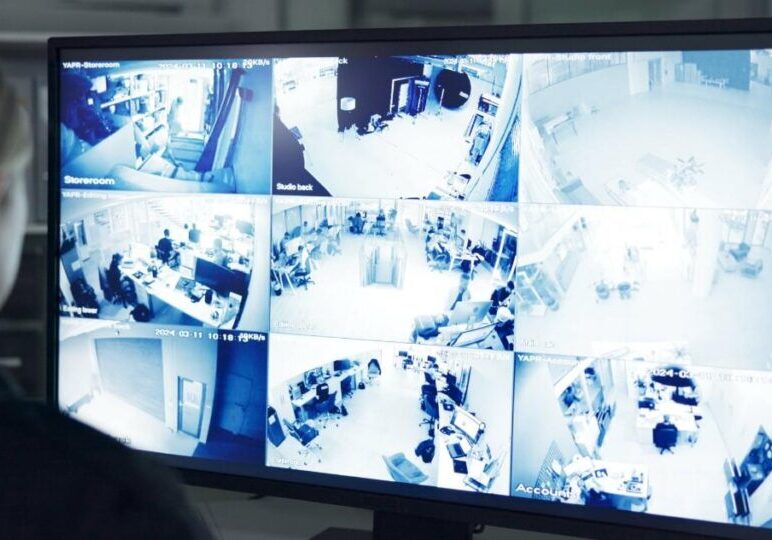
Summary: Retailers today run both physical stores and online stores, which makes security harder than ever. There are risks at every level, from theft in stores to fraud and data breaches online. A good retail and e-commerce security plan includes real-time monitoring, advanced surveillance, and safe online practices to keep assets, customers, and daily operations safe. This helps businesses stay strong in a retail world that is becoming more connected.
These days, shops and online stores are linked, and customers go easily between the physical and digital worlds. For a business, though, this means there’s a much bigger area to be attacked. Risks aren’t contained to just one place anymore, whether it is things being stolen in the shop, or online data being hacked. So, security for both shops and online selling is now a critical part of how a modern store is run, not something to be considered at the last minute.
Understanding Retail and E-Commerce Security

Businesses used to deal with security in the store and security for the website as completely separate things. But that doesn’t work anymore. Now, a single sale can use lots of different systems: a till, cloud computer services, a way to process payments, and a list of customers. If one of those parts has a weakness, the whole process is at risk.
A security system that’s all in one piece is about protecting the whole of what the customer does, not just each little interaction. It links up cameras and security in the building with keeping an eye on things on the computer, giving a much more complete picture of what is going on with the business. This change allows stores to get from having bits and pieces of defense, to a stronger, more able to recover system.
Why Retail & E-Commerce Monitoring Is No Longer Optional
Shops and online stores are always busy; it is too easy to miss something important unless someone is watching all the time. Retail and E-Commerce Monitoring gives you a way to see what’s going on in both the building and online, and it allows businesses to spot anything unusual as it happens, not after it is found.
This type of monitoring changes how businesses deal with danger. Instead of looking at what went wrong after a loss, the team can do something while the problem is developing. Watching in real time and having smart alerts means that problems are found and sorted out quickly, lowering the effect on both money and how the business runs.
In-Store Security Challenges That Continue to Evolve
Physical retail spaces still deal with familiar challenges, but the nature of those challenges has changed. Shoplifting has become more organized, often involving repeat patterns that are difficult to track manually. Internal theft also remains a concern, particularly in environments where access control is not tightly managed.
At the same time, most stores deal in environments where safety and loss prevention matter the most. High footfall, open layouts, and extended hours all increase exposure to unexpected vulnerable situations. So if there is no real-time visibility, every minor incident can escalate because no one is aware of them early enough.
Digital Threats in E-Commerce Environments
Digital Threats in e-commerce environments work differently. While in-store risks are visible, online threats often happen in the background. Payment fraud, account takeovers, and phishing attempts can occur anytime without immediate detection, which makes them particularly damaging to the organization. These threats are not limited by geography or any place, which means businesses are exposed to a global risk landscape.
Customer data is another major concern. A breach doesn’t just affect finances; it directly impacts brand credibility. Customers expect their information to be handled securely, and any failure in that area can lead to long-term trust issues.
This is why digital security measures need to go beyond basic protections. Continuous monitoring, secure transaction systems, and proactive threat detection are becoming standard rather than optional.
Retail and E-Commerce Security Best Practices for Store Environments
As retail systems become more interconnected, businesses are focusing on building layered security strategies that address both physical and digital risks. Strong access control ensures that sensitive areas and systems are only accessible to authorized personnel, reducing the chances of internal misuse.
Secure transaction handling is equally important. Encryption and protected payment gateways help safeguard customer data, while regular system updates close potential vulnerabilities before they can be exploited. These practices may seem technical, but they directly influence how secure and reliable a business appears to its customers.
Real-time monitoring ties everything together. By maintaining continuous visibility, businesses can detect unusual activity, respond faster, and reduce the likelihood of incidents escalating into larger problems.
How AI and Analytics Are Transforming Retail Security
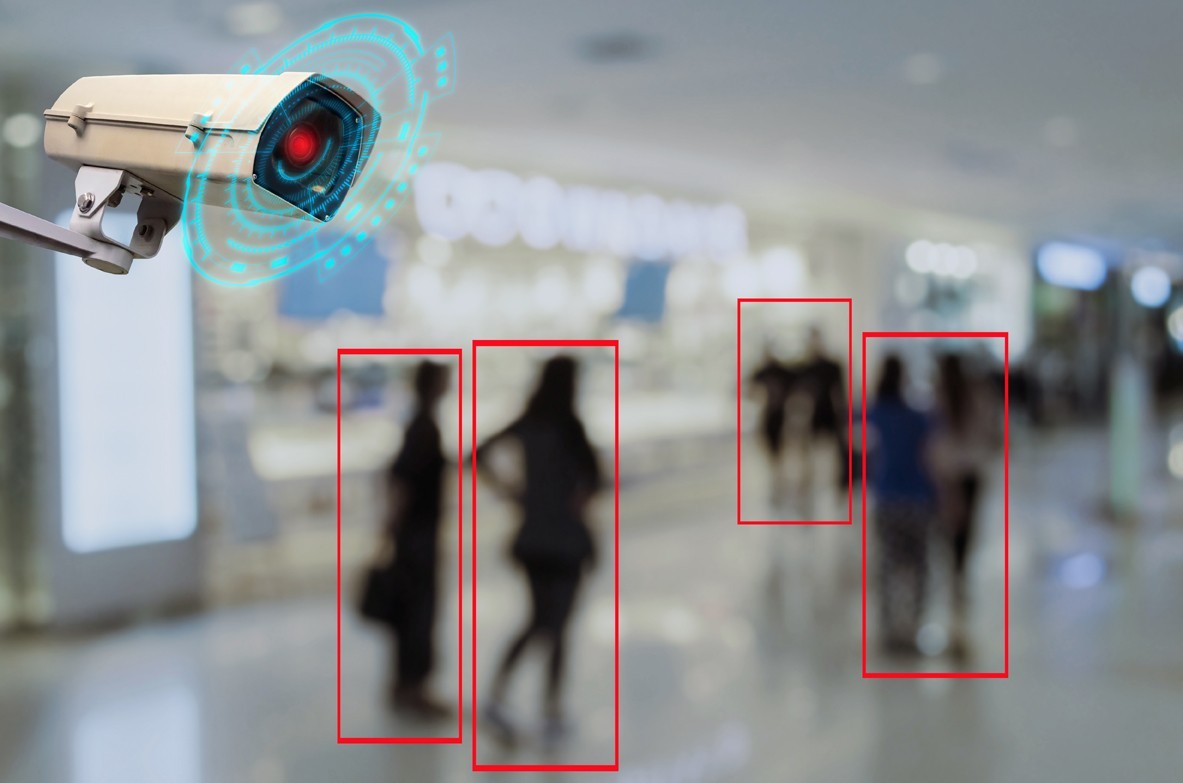
Businesses are using AI to change the way they look at security data. AI systems can quickly find patterns and point out unusual events without having to go through hours of footage or transaction logs by hand.
In a store, this could mean noticing strange patterns of movement, spotting people who are hanging around, or flagging behavior that is different from what is normal. In e-commerce, it can mean seeing strange buying habits that point to fraud.
Integrating Physical and Digital Security Systems
Out of many, one of the most effective ways to strengthen security is by connecting physical and digital systems. When surveillance data is combined with transaction data, businesses gain a little more understanding of what’s happening around them.
For an example, unusual in-store activity can be linked with transaction records to identify patterns that might go unnoticed in many cases. This integration can lead to more accurate detection and comparatively much faster response that can reduce the chances of incidents slipping through the cracks.
Business Continuity and Incident Response Planning
Even with strong retail security systems solutions in place, incidents can still occur. What matters the most is how quickly and effectively a business can respond to these mishappenings. A well-defined incident response strategy makes sure that the teams know what to do, minimizing disruption and reducing recovery time.
In addition, Business continuity planning also plays an as important role here. By preparing for potential disruptions, businesses can maintain their day-to-day operations even when unexpected events occur. This level of preparedness is what separates minor setbacks from major disruptions often.
Building a Scalable and Future-Ready Security Strategy
Retail is evolving and now security strategies need to evolve with it. Businesses who are still relying on outdated or traditional systems often struggle to keep up with changing dynamics and in that scenario a scalable approach makes sure that security can grow alongside the business without requiring constant restructuring.
By investing in integrated systems, real-time monitoring and intelligent analytics, businesses can create a framework that adapts to new challenges which can improve protection and also supports long-term growth and stability.
The essence is that businesses can enhance their protection through long-term growth and stability by investing in solutions like integrated systems, real-time monitoring, and intelligent analytics that will adapt to the challenges ahead and develop their ability to respond to new challenges.
Conclusion: The New Standard for Retail and E-Commerce Security
Retail today runs on interconnected systems where in-store activity and online operations constantly influence each other. Having said that, in this kind of environment, security is no longer something businesses can afford to treat as secondary because it directly impacts their revenue, customer trust, and the ability to operate without disruption. Without a well-structured approach to retail and e-commerce security, even small gaps can lead to larger, harder-to-control risks.
However, what defines strong security now is not just protection, but awareness and responsiveness. Businesses should know what’s happening as it happens and act before that issue turns into major losses. Because this shift from passive systems to active oversight is what allows retail business environments to stay stable even as they grow more complex. When security is built this way, it stops being a limitation and starts supporting smoother, more confident operations.
Resolute Partners focuses on bringing these elements together, helping retailers and e-commerce businesses maintain visibility and control across all parts of their business. So, if you are a retail or e-commerce business looking to bring more clarity and consistency to your security setup, it may be the right time to explore a more connected approach.
FAQs
1. What is retail and e-commerce security?
Retail and e-commerce security refers to the systems and practices used to protect both physical stores and online platforms from risks like theft, fraud, and data breaches. It covers everything from in-store surveillance to secure payment processing and real-time monitoring.
2. Why is Retail & E-Commerce Monitoring important for businesses?
Because retail operations don’t stop, risks can develop at any time. Continuous monitoring helps businesses stay aware of what’s happening across stores and online platforms, making it easier to detect unusual activity early and respond before it turns into a bigger issue.
3. What are the common security risks in retail and e-commerce?
In physical stores, common risks include shoplifting, internal theft, and safety incidents. In e-commerce, businesses often deal with payment fraud, phishing attempts, and data breaches. Most retailers face a combination of both, which is why a unified approach is important.

Michael S. Blanco is the Chief Executive Officer and Co-Founder of Resolute Partners, LLC, where he leads strategic initiatives across various divisions. After owning family entertainment centers in New England, he co-founded Resolute Partners in 1996, launching the first Internet cafés for the U.S. Navy and partnering with AT&T for global deployment. A pioneer in wireless communications, Michael has expanded the company’s focus to include Energy Management/IoT, Cybersecurity, and Managed Video Security. He holds a degree from the Rochester Institute of Technology.
Stay up to date.
Subscribe for latest news, protection tips, special offers, and more!