Summary: License Plate Recognition (LPR) systems help businesses monitor and secure vehicle activity in real time by automatically capturing and analyzing license plate data. Unlike standard surveillance cameras, LPR technology turns vehicle movement into actionable intelligence by triggering alerts, managing access control, and logging entries and exits instantly. This blog explains how LPR cameras work, where they deliver the greatest impact, and why industries such as logistics, automotive dealerships, and residential communities rely on them. It also explores how integrated LPR systems improve security operations, reduce theft risks, streamline vehicle access, and provide measurable operational and financial benefits through smarter vehicle monitoring.
Every day, thousands of vehicles move in and out of parking structures, gated communities, warehouse yards, auto dealerships, and commercial properties, and for most operators, that movement goes largely untracked, like when a car enters or when a car leaves, whether it belonged there or not, whether something was stolen, whether a restricted vehicle slipped through, those questions rarely get answered in real time.
That is the gap License Plate Recognition (LPR) fills. It is not a futuristic concept, but it is a proven technology that’s already reshaping how businesses monitor and secure vehicle access. And when paired with live video monitoring and intelligent surveillance infrastructure, it becomes one of the most operationally valuable tools a security-minded organization can deploy.
What Is License Plate Recognition?
License Plate Recognition is an image-processing technology that reads vehicle plates automatically with no human involvement required. A camera captures a vehicle as it enters a field of view, the system isolates the plate, converts the characters into readable data, and cross-references that data against a database. All of that happens within a fraction of a second.
What separates LPR from general surveillance is intent. A standard camera records everything passively, but an LPR system is purpose-built to extract actionable vehicle identity data from that footage and to act on it. Whether that action means raising a gate barrier, triggering an alert, logging an entry event, or notifying a monitoring team, the technology converts passive footage into live intelligence.
Modern LPR platforms use continuous video feeds processed by AI-driven optical character recognition (OCR) engines, which means they can detect and read plates without any physical trigger, even on vehicles moving at speed, in low light, or from challenging angles.
How License Plate Reader (LPR) Cameras Actually Work
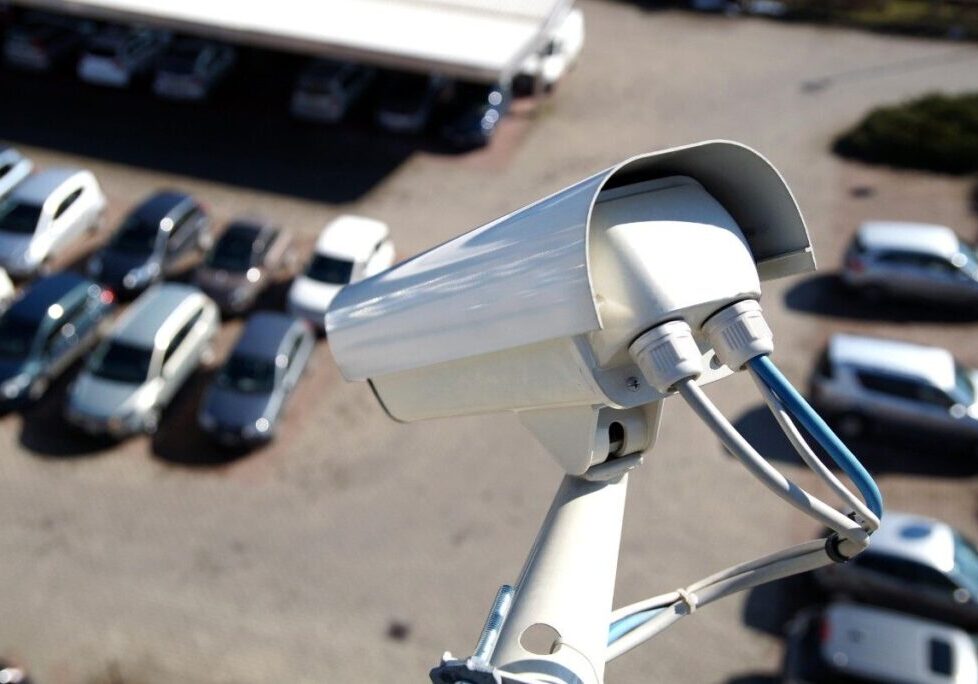
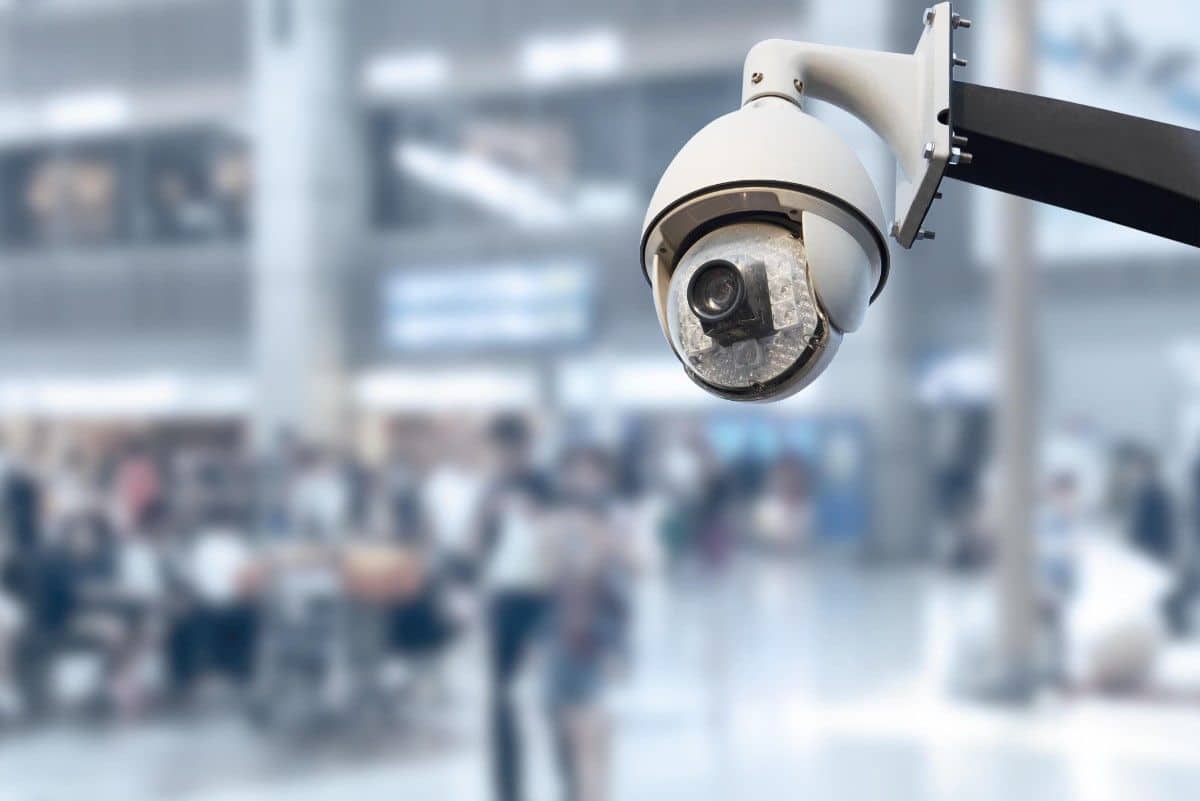
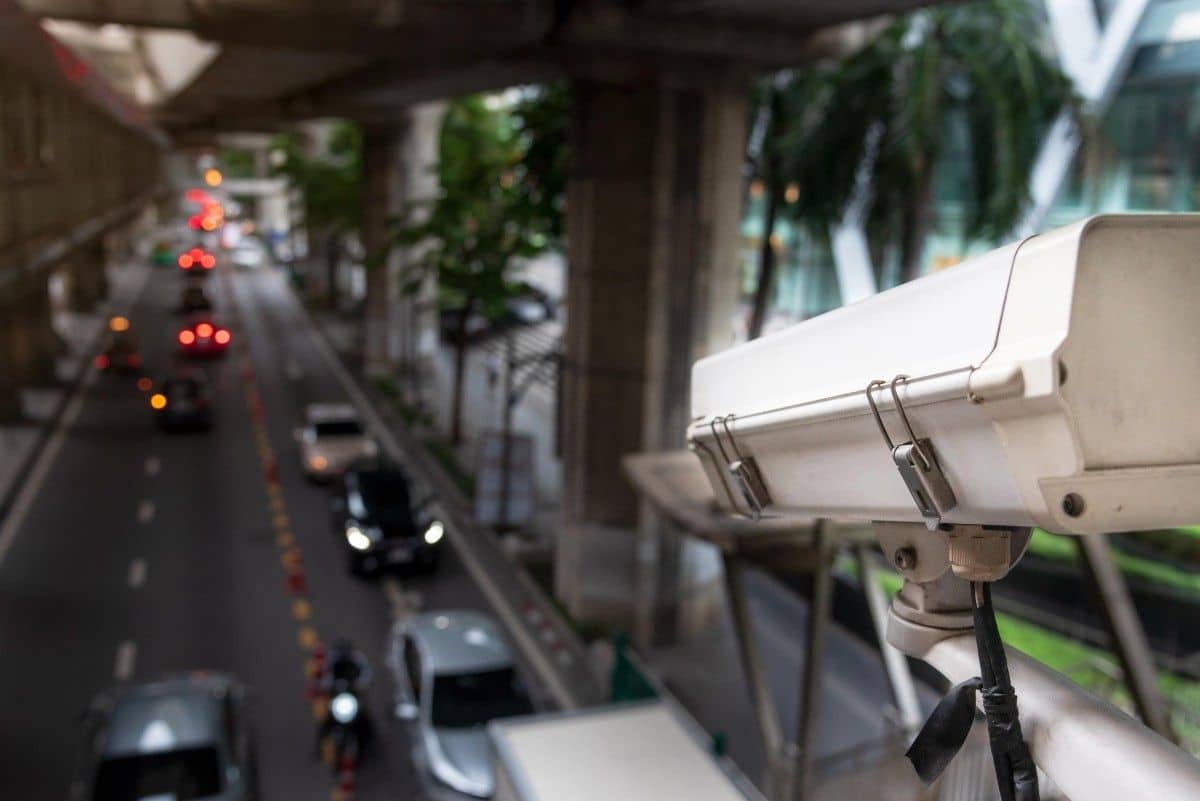
License Plate Reader (LPR) cameras are purpose-built for plate capture, and that distinction matters when evaluating infrastructure. They feature narrow fields of view optimized for reading plates rather than wide-area coverage, high shutter speeds that eliminate motion blur, and built-in infrared illumination so they operate reliably at night without visible light sources.
Once the camera captures a clean image, the processing pipeline isolates the plate within the frame, normalizes the image for angle and contrast, segments individual characters, and runs OCR to assemble the plate string. That string is then timestamped, logged, and checked against a watchlist.
That watchlist functionality is where LPR shifts from passive record-keeping into active security. Administrators configure authorized plates (whitelist), flagged plates (blacklist stolen vehicles, trespassers, individuals subject to restraining orders), or both. When a match occurs, the system triggers a real-time alert routed to a monitoring station, mobile app, access control panel, or all three simultaneously.
Where LPR Delivers the Most Impact
Automotive Dealerships
Automotive lots hold millions of dollars in open-air inventory with minimal physical barriers between the street and the vehicles. LPR at dealership entry and exit points captures every plate that moves through the property. Any vehicle that arrives after hours, parks near inventory, or matches a flagged plate triggers an immediate response, way before damage is done, rather than after.
Warehouses and Logistics Facilities
LPR automates gate access for authorized delivery vehicles, eliminating manual check-in processes and reducing bottlenecks. Every vehicle entry and exit is logged with a timestamp useful for security audits, delivery reconciliation, and investigating cargo discrepancies. In environments where theft is a documented risk, knowing exactly which vehicles were on-site during a specific window is a fundamental investigative capability.
Multi-Family Residential Properties
For apartment communities and gated neighborhoods, LPR handles access control and resident safety in one system. Authorized resident plates enter without a clicker or card, and visitor vehicles are logged automatically. When a vehicle is reported stolen from the property, reviewing the LPR log immediately establishes a timeline, something that would otherwise require hours of manual footage review.
LPR as Part of an Integrated Security Ecosystem
LPR becomes significantly more powerful when it operates as part of a broader security infrastructure. On its own, it captures and logs plate data. But when that data feeds into a live video monitoring platform, access control system, and real-time alert workflow, the capabilities compound.
A flagged plate match in a standalone system triggers an alert. In an integrated setup, it simultaneously locks the gate, pulls up the live camera feed for a monitoring agent, sends an SMS to the site manager, and begins recording a tagged event clip to cloud storage. That is the difference between detecting something and actually stopping it.
IoT integration adds further context. Motion sensors, perimeter alarms, and environmental triggers can all contribute to an LPR event. A flagged plate arriving during a perimeter breach is a fundamentally different situation than the same plate arriving at noon on a Tuesday and a well-integrated system surfaces that distinction automatically.
The Measurable Return on LPR Investment
Security investments get scrutinized on ROI, and LPR holds up well under that analysis particularly when the full cost of the problem it addresses is calculated accurately. Beyond direct vehicle theft, the downstream impacts include insurance claims, deductible costs, premium adjustments, and the operational disruption of managing each incident. A system that intercepts even a single vehicle theft per year can generate a return that exceeds its annual operating cost.
The deterrence effect compounds that return. Visible LPR cameras signal that a property actively monitors vehicle access and opportunistic actors, who generally target properties that look unsecured, tend to move on. There’s also a meaningful operational efficiency gain for businesses currently relying on manual vehicle logs or staffed gate check-ins. LPR automates that process entirely, freeing security personnel for higher-value activities.
How Resolute Partners Approaches LPR Deployment
At Resolute Partners, LPR is a component of a security architecture we design from the ground up around your specific environment, vehicle flow patterns, and risk profile. That process starts with a site assessment that covers camera positioning, lighting conditions at each capture zone, integration points with existing infrastructure, and how alerts need to be routed to be actionable.
When our LPR deployment connects to our live video monitoring platform, clients gain the added layer of trained human oversight. Our U.S.-based monitoring agents review flagged events in real time, apply judgment to ambiguous situations, and coordinate response when it’s needed. That combination of automated plate recognition and live agent verification is what separates a system that logs incidents from one that actually prevents them.
If vehicle monitoring is a gap in your current security posture, we are ready to help you close it. Contact Resolute Partners to schedule a site assessment and find out what a properly deployed LPR system can do for your operation.
FAQ
1. Where does LPR make the biggest difference?
Anywhere vehicle movement matters but isn’t being actively tracked. That usually means places like warehouses, dealership lots, gated communities, and commercial properties with multiple entry points. If vehicles are coming and going and no one has a clear record of that activity in real time, LPR fills that gap immediately.
2. How accurate is License Plate Recognition (LPR)?
Accuracy isn’t just about the software, it’s about the entire setup. With the right camera positioning, lighting conditions, and system configuration, modern LPR can achieve very high accuracy rates. But like any security system, it performs best when it’s designed around the environment it’s operating in, not just installed and left alone.
3. Do you actually need a license plate database for LPR to be useful?
You can run LPR without one, but you’re only using a fraction of what it can do. The real value comes from defining which vehicles belong and which don’t. Once that’s in place, the system can start making decisions, allowing access, flagging risks, and alerting your team without delay.

Michael S. Blanco is the Chief Executive Officer and Co-Founder of Resolute Partners, LLC, where he leads strategic initiatives across various divisions. After owning family entertainment centers in New England, he co-founded Resolute Partners in 1996, launching the first Internet cafés for the U.S. Navy and partnering with AT&T for global deployment. A pioneer in wireless communications, Michael has expanded the company’s focus to include Energy Management/IoT, Cybersecurity, and Managed Video Security. He holds a degree from the Rochester Institute of Technology.

Stay up to date.
Subscribe for latest news, protection tips, special offers, and more!