Summary: Understanding cloud security helps businesses move away from outdated infrastructure and take a more proactive approach to protection. A cloud-based security system brings together real-time monitoring, smart analytics, encrypted storage, and remote access into one scalable platform, closing the gaps that traditional on-premise setups often leave open. It reduces upfront costs, speeds up incident response, and makes compliance easier across single or multi-location operations. Whether you manage a warehouse, dealership, retail space, or residential property, switching to a cloud-based security delivers real, measurable results. It’s not just a technology upgrade, but it is a smarter, more resilient way to protect everything you’ve worked to build.
Physical locks and on-premise DVRs used to be enough. Today, they leave too many gaps. Data moves across networks, employees access systems remotely, cameras stream footage around the clock, and threats arrive faster than any traditional setup can handle. That’s exactly why more commercial businesses, property managers, and multi-location operations are asking a very practical question: What is cloud security, and is it the right move for us?
The short answer is yes, for most businesses. But the honest answer is more nuanced than that, and this blog will give you both. The global video surveillance market reached approximately USD 74 billion in 2024 and is projected to surpass USD 147 billion by 2030. That growth is being driven primarily by cloud platforms, and understanding what they actually offer and where the trade-offs lie is how you make the right decision for your operation.
What Is Cloud Security?

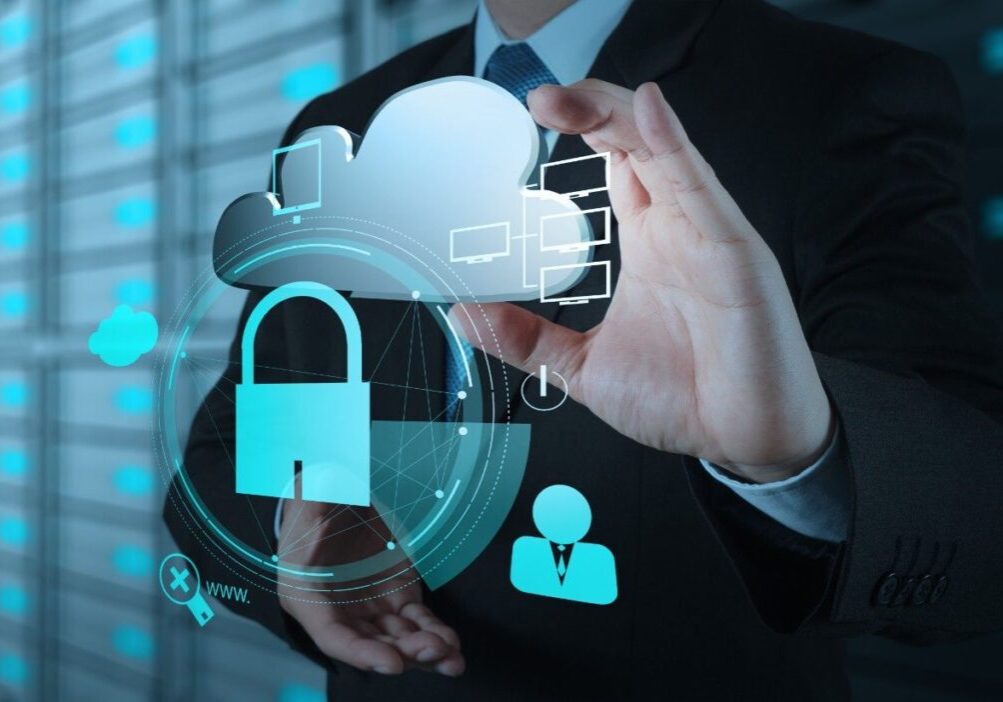
When people ask “what is cloud security”, the first instinct is usually to think about antivirus software or network firewalls. In the context of physical and video security, it’s much broader than that. Cloud security refers to a model where cameras, sensors, access points, and network devices are managed through a centralized platform hosted on remote, secure servers, rather than local hardware sitting inside your facility.
Footage your cameras capture doesn’t get saved to a DVR in a back room. Instead, it’s stored on your edge cameras, local appliance and encrypted, transmitted over your network, and stored in the cloud, where it can be accessed, reviewed, and managed from any device, anywhere, at any time. Unlike traditional closed-circuit systems, where footage is locked to a local recorder with limited sharing capabilities, a cloud-based security system operates independently of physical infrastructure, allowing operators to monitor everything from a single location, regardless of how many sites they manage.
For businesses like automotive dealerships, warehouses, multi-family residential properties, and retail operations, this shift is significant. Security becomes scalable and manageable without requiring a large in-house IT department or complex VPN configurations just to check a camera feed remotely.
How a Cloud-Based Security System Works
A cloud-based security system integrates your cameras, access points, sensors, and network devices into a centralized platform hosted off-site. Footage is encrypted at the edge, transmitted securely over the internet, and stored in geographically redundant data centers. Authorized users access it through a secure browser or app live or recorded, from any location.
Here’s what that looks like in practice. If a camera at one of your properties detects suspicious activity at 2 a.m., the system doesn’t wait for someone to walk in the next morning. It flags the event, routes the alert to trained monitoring professionals, and triggers an immediate response, whether that’s a live audio warning through on-site speakers, direct notification to your operations team, or escalation to law enforcement.
What the Numbers Say About Cloud Security in 2025
The shift to cloud security isn’t just a trend the data makes the case for urgency. According to the 2025 State of Cloud Security Report by Orca Security, based on analysis of billions of cloud assets across AWS, Azure, Google Cloud, Oracle Cloud, and Alibaba Cloud, 32% of cloud assets are currently in a neglected state, with an average of 115 vulnerabilities per cloud asset. That’s not a fringe problem, it’s an industry-wide exposure that businesses relying on outdated infrastructure are walking into blind.
The attack surface problem runs even deeper. 76% of organizations have at least one public-facing asset that enables lateral movement, meaning a single misconfiguration can open the door to a far larger breach across the entire network. A cloud-based security system with continuous monitoring and active management closes that window before it becomes a crisis.
This is precisely why what is cloud security can no longer be answered with a simple definition. It requires an active, managed approach, one that evolves alongside the threats rather than reacting to them after the fact.
Features That Separate a Strong System From a Weak One
Before committing to any platform, knowing what distinguishes a reliable cloud-based security system from a mediocre one is essential. These are the capabilities that drive real results:
Continuous Monitoring With Live Agent Backup
Strong cloud security setups don’t just record, they watch. Trained professionals actively review live feeds and respond to alerts in real time, meaning incidents get addressed as they happen rather than discovered the next morning.
Real-Time Monitoring and Alerts
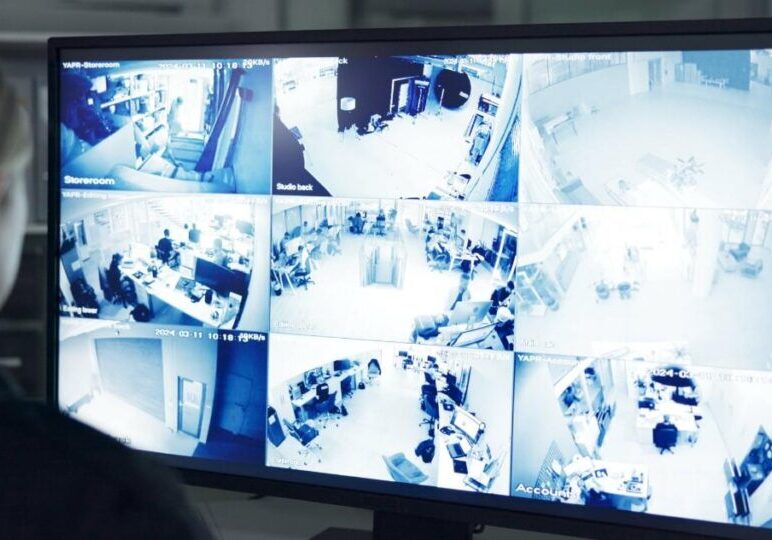
A strong cloud security setup delivers live visibility across all your locations simultaneously. Alerts are triggered by actual events like motion in restricted zones, unusual access attempts, perimeter breaches, not just passive recording that gets reviewed after the fact.
AI-Powered Video Analytics
Modern systems interpret footage, not just capture it. AI-assisted detection identifies motion in restricted zones, loitering, unauthorized access, and behavior patterns that human eyes would miss across hours of footage. When businesses ask what is cloud security in a surveillance context, this intelligent layer is often the capability that changes things most significantly.
End-to-End Encryption and Built-In Cybersecurity
Every footage file, alert log, and system update should be encrypted in transit and at rest. Resolute’s VSaaS includes ongoing hardware and software cybersecurity as part of the managed service, not as an optional add-on, with role-based access controls, multi-factor authentication, and full audit trails built in.
Remote Access Through a Secure Client Portal
Administrators can review live and recorded footage, manage user permissions, pull incident reports, and monitor activity across every location through a single secure interface from any smartphone, tablet, or computer.
Scalability Without Infrastructure Headaches
Adding cameras, sensors, or new locations to a cloud-based security system doesn’t require new server hardware or facility rewiring. New devices are provisioned into existing infrastructure, significantly faster and simpler than traditional expansion.
Integration with IoT and Access Control
The most capable systems connect with smart locks, environmental sensors, badge readers, alarms, and IoT-enabled devices, creating a unified view of physical and digital security across the entire facility rather than isolated data points from disconnected tools.
Why Businesses Are Making the Switch To Cloud-Based Systems
Understanding what is cloud security conceptually is one thing. Understanding what it means for your specific operation, including the honest trade-offs, is another.
Reduced Capital Expenditure
Traditional security infrastructure carries high upfront costs and depreciates quickly. Resolute’s VSaaS runs on a fixed monthly fee that covers monitoring, storage, maintenance, and cybersecurity from day one, no unexpected replacement bills, no guessing what the next upgrade costs.
Faster Incident Response
When monitoring is handled through the cloud with live agents backing up AI detection, incidents get addressed in seconds rather than being discovered the next morning. The difference between a deterred theft and a completed one often comes down to response time.
Business Continuity
Local hardware can fail, get stolen, or get destroyed in a fire. Cloud-stored footage and cloud-managed systems keep operating even when physical equipment at a location is compromised. Your data stays intact.
Compliance Support
Many industries, such as cannabis, healthcare, finance, and government contracting, carry strict requirements around how security footage and sensitive data are stored. A well-built cloud-based security system includes audit trails, access logs, and retention policies that make compliance documentation far less painful.
Centralized Visibility Across Multiple Sites
For multi-location businesses, this is genuinely transformative. Rather than separate systems, separate vendors, and separate reviews at each property, a cloud-based approach delivers one unified view. Managers and security teams see everything from one platform.
Real-World Use Cases
So what does this look like in practice? Here are some real-world scenarios where businesses are already seeing the difference.
Automotive Dealerships
Lot theft, vandalism, and slip-and-fall claims are ongoing headaches for dealerships. A cloud-based security system helps catch suspicious activity early, pulls up verified footage when liability disputes arise, and makes it much faster to coordinate with law enforcement when something does go wrong.
Warehouses and Distribution Centers
Inventory shrinkage, unauthorized after-hours access, and safety compliance are all addressable through a cloud-connected system. Real-time alerts for perimeter breaches and anomalous activity inside the facility give operations teams the visibility they need without requiring someone to stare at a monitor all day.
Multi-Family Residential Properties
Residents expect safety, and property managers need accountability. A cloud-based approach lets property teams monitor common areas, manage access control, and respond to incidents without being physically on-site at all times. It also gives residents peace of mind that security isn’t dependent on a single camera recording to a local hard drive.
Construction Sites
Equipment theft is one of the biggest cost drivers on active job sites. Remote cloud monitoring, particularly overnight and on weekends when sites are empty, provides a layer of deterrence and incident documentation that traditional site security can’t match.
Retail and Shopping Centers
Loss prevention, employee safety, and customer experience all intersect at the security layer for retail. Cloud-connected systems allow for coordinated monitoring across large properties, quick evidence retrieval for incidents, and analytics that inform staffing and layout decisions.
Is Cloud Security Right for Your Business?
If you’re still working through what is cloud security and whether it fits your operation, here’s a practical filter. If your business has multiple locations, valuable assets, compliance requirements, or a need for after-hours monitoring, and you’re currently relying on local DVRs or no centralized system at all, the answer is almost certainly yes.
If your connectivity is reliable, your vendor supports open architecture, and your budget accommodates a fixed monthly model, a fully cloud-based approach likely delivers everything you need. If you’re in an environment with inconsistent internet, data residency requirements, or latency-sensitive operations, a hybrid model may serve you better. Either way, the right answer starts with a system-level assessment, not a technology preference.
Final Thoughts
What is cloud security? It’s the evolution of how businesses protect their people, property, and data in a world where threats don’t keep business hours and operations don’t fit neatly within four walls.
A properly implemented cloud-based security system isn’t just a technology upgrade, it’s a shift in how you think about risk. Instead of reacting to incidents after the fact, you gain the tools to deter them, detect them in real time, and document everything with clarity. For businesses serious about protecting what they’ve built, that shift is well worth making.
At Resolute Partners, we’ve been designing and deploying advanced security and network solutions since 1997. From VSaaS and live video monitoring to IoT integration, virtual security patrols, and multi-site surveillance management, we build systems that work for your specific environment, not a generic package that fits nobody perfectly. If you’re ready to move beyond outdated infrastructure, contact our team and let’s talk about what the right cloud-based setup looks like for you.
FREQUENTLY ASKED QUESTIONS
Q1. Is cloud security better than traditional security systems?
For most modern businesses, yes. Traditional systems depend on local DVRs that can fail, get stolen, or go unmonitored for hours. When you understand what is cloud security and how it operates, the difference becomes clear cloud-based setups offer real-time detection, remote access, automatic backups, and AI-assisted monitoring that on-premise hardware simply can’t replicate at the same level.
Q2. Can I access my cloud security cameras remotely?
Yes, and this is one of the biggest practical advantages. A cloud-based security system lets you view live footage, review past recordings, manage user permissions, and receive alerts from any smartphone, tablet, or computer, regardless of where you are. For business owners managing multiple locations, this is a game-changer.
Q3. What happens to recorded footage in a cloud security system?
Footage is encrypted and stored on secure off-site servers rather than a local hard drive. Most platforms offer configurable retention periods anywhere from a few days to several months, depending on your compliance or operational needs. Even if cameras or on-site equipment are damaged, your recordings remain protected in the cloud.
Q4. Is cloud security good for small businesses?
Absolutely. One of the most common misconceptions about what is cloud security is that it’s only built for large enterprises. In reality, the subscription-based model makes professional-grade monitoring accessible to small businesses without requiring a dedicated IT team or significant upfront hardware costs.

Michael S. Blanco is the Chief Executive Officer and Co-Founder of Resolute Partners, LLC, where he leads strategic initiatives across various divisions. After owning family entertainment centers in New England, he co-founded Resolute Partners in 1996, launching the first Internet cafés for the U.S. Navy and partnering with AT&T for global deployment. A pioneer in wireless communications, Michael has expanded the company’s focus to include Energy Management/IoT, Cybersecurity, and Managed Video Security. He holds a degree from the Rochester Institute of Technology.

Stay up to date.
Subscribe for latest news, protection tips, special offers, and more!