Summary: The year 2026 sees the development of IoT applications as the confluence of connected systems, real-time data, and scalable enterprise platforms. The CEOs are investing more and more in the organized IoT app development solutions as a means of performance improvement, achieving their long-term goals, and safe IoT integration of devices, cloud infrastructure, and user interfaces. A systematic approach assures that the IoT solutions will expand in the right way and thus facilitate the company’s long-term objectives.
IoT applications are rapidly accepted by different sectors through internet of things app development. Factories are monitoring their machines with the help of connected sensors, healthcare institutions are tracking patients from remote locations, and retail buildings are utilizing intelligent systems for energy consumption. IoT applications, unlike traditional software, are required to link to physical devices, continuously collect data, and securely communicate with either cloud or on-premise systems.
Understanding the concept of IoT application development is important for businesses. If the implementation is done the right way, the solutions will deliver information that will affect the decisions made, reduce the company’s expenses, and raise the level of safety. However, on the contrary, if the IoT is poorly planned, its execution may result in security breaches, risks to operations, and wastage of resources.
What Is IoT App Development and How Does It Work?
The development of IoT applications is primarily concerned with the creation of software that allows connected devices to interact with both the users and the systems of the enterprise. These apps work as a mediator in the IoT world, managing all the data collected from the devices, whether processed at the edge or in the cloud, and turning it into either insights or automated actions as part of IoT app development. Organizations that connect sensors, gateways, platforms, and user interfaces into one system benefit from uninterrupted data access, process automation, and better operational decision-making through advanced internet of things app development.
How IoT Apps Differ From Traditional Mobile or Web Apps
IoT applications differ from conventional software in several ways:
Real‑Time Data Ingestion and Device Communication
IoT applications, which are part of the Internet of Things, manage and process endless data streams from different sources. Therefore, employing targeted communication protocols along with extremely low-latency processing techniques is a necessity in IoT application development.
Dependence on Hardware, Sensors, and Connectivity
IoT applications, compared to regular ones, require hardware, sensors, and networking to be continually reliable for their entire lifecycle. The reliability and quality of the software layer are closely linked to the physical devices, making IoT app development solutions critical for stability
Regular applications concentrate on actions performed by the user. However, Internet of Things (IoT) applications should provide direct communication between the dual-cloud and devices, cope with the communication that is often cut off, and ensure security throughout the entire process.
What Types of IoT Applications Exist Today?
The different types of IoT applications that can be utilized by U.S. companies through internet of things app development are as follows:
- Consumer IoT apps connect the network of smart home devices, wearables, and personal automation systems.
- The applications of industrial IoT (IIoT) allow for a wide range of activities such as automating factories, predicting equipment failure, and monitoring environmental conditions.
- Enterprise IoT systems are integrated with ERP, CRM, and operational platforms to constantly keep an eye on the various aspects, such as assets, users, and business processes.
Application domains consist of fleet management dashboards, remote patient monitoring apps, smart energy systems, and connected supply chain solutions.
What Are the Core Features of a Successful IoT App?
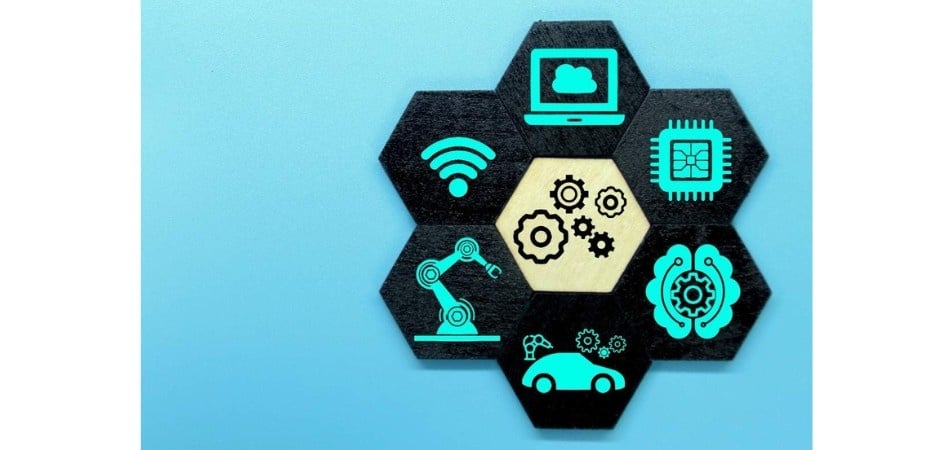
There are many features that an IoT application can share, making it a success:
Device Connectivity and Management
The application must be able to support the onboarding, configuration, and management of different devices in huge numbers.
Real‑Time Data Collection and Visualization
The availability of dashboards and the performance metrics of alerts are critical.
Security and Access Control
The mechanism for this includes strong authentication, encryption, and user role access, which prohibits service data from being accessed by unintended agents.
Scalability and Performance
Applications should be able to process large amounts of device data without any delays or slowdowns.
Unified Reporting
Reporting that is consolidated allows decision-makers to get insights from device data that are actionable.
These features are basic for enterprise applications that increase operational efficiency and align with strategic outcomes.
What Is the Typical IoT App Development Tech Stack?
A McKinsey analysis estimates that IoT could generate up to $12.6 trillion in global economic value annually by 2030, primarily driven by improvements in operational efficiency, predictive maintenance, and workplace safety across manufacturing, healthcare, and infrastructure. The IoT application development tech stack consists of layers that cover frontend interfaces, backend processing, connectivity, and analytics:
Frontend Technologies
React, Flutter, Swift (iOS), and Kotlin (Android) frameworks ensure fast and smooth interactions for users.
Backend and Application Layer
Python, Java, and Node.js are among the programming languages that take care of business logic, device communication, and API services
Cloud Platforms and Infrastructure
AWS IoT Core, Google Cloud IoT, and Microsoft Azure IoT Hub are the main examples of the security and reliability controls provided for the management of devices and ingestion of data.
Connectivity and Protocols
Various protocols like MQTT, CoAP, HTTP(S), and LoRaWAN are able to support different network environments, and at the same time, they ensure the data transfer is effective.
Data Analytics and Integration Tools
InfluxDB, Grafana, Power BI – the time-series databases, dashboards, and integration frameworks – that come along with enterprise systems support device data connecting
The choice of the right technology combination guarantees that the application will be scalable, safe, and fit for the long-term business needs.
How Does the IoT App Development Process Work?
The development of a structured IoT application typically includes the following phases:
Discovery and User Case Definition
The requirements of the business are converted into certain IoT use cases. The main points of this phase are objectives, participants, and measures of success.
Architecture and System Design
The developers state the main system architecture, deciding on cloud, edge computing, communication protocols, device management, and security controls.
Development and Integration
This step comprises the development of frontal and backward components, connection to device APIs, and the setting of secured data flows.
Testing, Deployment, and Maintenance
Functional, security, and performance testing ensure that the system is deployment-ready. Security updates and the introduction of new features are what constitute regular maintenance.
What Challenges Do Businesses Face in IoT Application Development?
The development of IoT applications presents challenges that are not limited to the existing software projects only, but also affect the areas of planning, security, cost control, and long-term reliability.
Device and Platform Fragmentation
In environments of the Internet of Things (IoT), devices belonging to various manufacturers are frequently integrated along with the respective protocols and management tools being applied for every device. This results in a challenging integration process, prolonged installation time, and maintenance that is extremely difficult; thus, regular maintenance becomes necessary.
Security, Privacy, and Risk Exposure
In many cases, the requirement for high-security measures is imposed by the limitations of the power of the processor and the battery life. If one device in the network is hacked, the entire network may become vulnerable because it is using unpatched firmware or outdated settings.
Scalability and Operational Complexity
With the increase in deployments to hundreds or thousands, the complexity and cost of the management of updates, inventory, connectivity, and support will rise accordingly.
Battery Life Constraints
Numerous gadgets continue operating for extended periods without receiving power from outside the device. Battery life is continuously challenged by security updates, frequent data transfer, and remote monitoring, particularly in inaccessible or harsh locations.
Addressing these challenges early in development helps organizations control risk, manage costs, and build IoT applications that remain reliable as deployments scale.
How Do IoT App Development Companies Support Enterprise Needs?

IoT app dev companies are a crucial factor in the transition of organizations from the deployment of single devices to the establishment of stable and large-scale IoT ecosystems across the entire enterprise. The partnership of IoT app development companies is not limited to the initial development phase but also covers long-term operational support.
Custom IoT App Development Solutions
Enterprises generally have specific operational needs that cannot be covered completely by standard platforms. IoT development partners create the applications according to the devices, workflows, and business objectives, and thus the solution is in line with existing processes instead of making expensive changes.
Integration With Existing Enterprise Systems
The Internet of Things (IoT) applications typically require the cooperation of more than one technology. The developers of the applications link the IoT platforms with the ERP systems, analytics tools, cloud services, and security frameworks. As a result, data flow between departments can be synchronized, visibility can be centralized, and decision-making can be improved
Ongoing Optimization and Support
Once the release occurs, the Internet of Things or IoT settings need to be monitored all the time, updated, and have their performance tuned. The development partners provide the enterprises with help over the years, such as firmware updates, changing the scalability, and improving security, which makes it possible for the enterprises to keep on being reliable and at the same time transform their operational needs according to the changing times.
What Should US Businesses Look for in an IoT App Development Solution?
When evaluating an IoT app development solution, organizations should focus on practical capabilities that support secure deployment, smooth integration, and long-term operational value rather than vendor branding.
Technical Expertise and Industry Experience
One of the key characteristics of a successful IoT development partner is that they should possess excellent experience in the fields of network engineering, device connection, and infrastructure design. They should also be capable of working with various IoT devices, including but not limited to sensors, meters, cameras, and access control systems, in different environments such as commercial, industrial, and public sectors. The extensive experience with devices minimizes the risk of integration and accelerates the deployment process.
Security-First Development Approach
Security must be incorporated at every phase, from device provisioning to network integration and application design. A robust solution must guarantee secure connectivity, controlled access, and safe integration with existing networks. This is particularly true for IoT systems employed for asset protection, safety monitoring, environmental sensing, and critical operations where failures might have real-world ramifications.
Long-Term Scalability and Flexibility
The IoT solutions must be able to support the growth of the company without additional redesign work. This applies to the addition of new devices, the expansion of the operation in different locations, as well as the adaptation to the changing needs of the operation. The use of flexible architectures and the application of proven integration practices will help to make sure that the applications remain effective during the scaling of the deployment and the evolution of technology.
Focusing on these criteria helps businesses select IoT app development solutions that deliver reliability, security, and sustained operational improvement.
Enterprise IoT Integration Services Built for Real-World Operations
Connected systems are a necessity for modern enterprises to protect their assets and to monitor the environment, and they have to be in place for the uninterrupted daily operations. However, the desired outcomes cannot be achieved just by implementing devices. Rather, they need a well-designed, interconnected system consisting of the three main components-connectivity, security, and infrastructure—working together in a consistent manner and at a large scale.
The enterprises that invest in IoT initiatives get the best results if the devices are selected correctly, connected with high security, and integrated into the existing systems seamlessly. Resolute Partners assists enterprises in each phase of the IoT lifecycle, starting from conception and installation through integration with security and optimization to the end, thus providing systems that are reliable in practical scenarios and that add value with the change of requirements.
A Direct Next Step
In case your enterprise is contemplating a fresh IoT adoption or having difficulties with expanding the current one, the right dialogue may avert the expensive blunders. Have a conversation with a specialist who is well-versed in the technology and the day-to-day running of the system as well. A concentrated conversation today can make a difference between your IoT setting being a persistent risk or a permanent advantage.
FAQs
Q1. What Is the Difference Between IoT Devices and Smart Devices?
Smart devices usually work independently and handle a single task. IoT devices are designed to operate within a connected system, sharing data with applications and platforms to support monitoring and automation.
Q2. How Do IoT Devices Affect Security and Safety?
Because IoT devices connect directly to networks and physical systems, security gaps can affect both data and operations. Proper integration and monitoring help reduce these risks.
Q3. Are IoT Devices Safe for Enterprise Use?
Yes, when deployed with secure network design, controlled access, and ongoing management. Correct integration plays a major role in long-term reliability.
Q4. What Are the Biggest Security Risks With IoT Devices?
Common risks include weak credentials, outdated firmware, and limited visibility across devices, especially in large deployments.
Q5. How Do IoT Security Solutions Help Protect Devices?
They focus on secure connectivity, access control, and continuous monitoring. Integration specialists like Resolute Partners help ensure devices are connected and managed safely within enterprise networks.

Michael S. Blanco is the Chief Executive Officer and Co-Founder of Resolute Partners, LLC, where he leads strategic initiatives across various divisions. After owning family entertainment centers in New England, he co-founded Resolute Partners in 1996, launching the first Internet cafés for the U.S. Navy and partnering with AT&T for global deployment. A pioneer in wireless communications, Michael has expanded the company’s focus to include Energy Management/IoT, Cybersecurity, and Managed Video Security. He holds a degree from the Rochester Institute of Technology.

Stay up to date.
Subscribe for latest news, protection tips, special offers, and more!


Live Video Monitoring
Our trained video security surveillance monitoring professionals can quickly spot suspicious activity captured by business security cameras. We review live video to determine if criminal behavior is suspected.