Summary: Commercial CCTV cameras come in many types: dome, bullet, turret, PTZ, fisheye, thermal, LPR, and more, each suited to different settings and purposes. Choosing the right mix depends on lighting, coverage area, identification needs, and connectivity, with most strong systems combining several camera types.
CCTV cameras are not one-size-fits-all. The best camera for a retail entrance may be a poor fit for a parking lot, warehouse perimeter, vehicle gate, loading dock, lobby, or large open work area.
The main types of CCTV cameras include dome, bullet, turret, PTZ, fisheye, multi-sensor, infrared/low-light, thermal, varifocal, LPR/ANPR, outdoor/weatherproof, IP/PoE, analog/HD-over-coax, wireless, and covert cameras. Each camera type has a different physical design, field of view, image capability, connectivity method, or specialized use.
This guide explains the different types of CCTV cameras, where each works best, what to consider before installation, and how to build a commercial video surveillance system that supports deterrence, detection, investigation, and real-time response.
Types of CCTV Cameras at a Glance
| CCTV Camera Type | Best Setting | Primary Use Case |
|---|---|---|
| Dome Camera | Offices, retail, lobbies, schools, hallways | Discreet indoor coverage and vandal-resistant monitoring |
| Bullet Camera | Parking lots, driveways, loading docks, perimeters | Visible deterrence and long-range exterior coverage |
| Turret Camera | Entrances, corridors, offices, retail, covered exterior areas | Flexible aiming and reliable low-light coverage |
| PTZ Camera | Large lots, yards, campuses, warehouses, construction sites | Remote pan, tilt, zoom, and active tracking |
| Fisheye / 360° Camera | Open retail floors, lobbies, warehouses, common areas | Wide-area coverage from one mounting point |
| Multi-Sensor / Panoramic Camera | Building corners, large yards, intersections, loading zones | Simultaneous multi-direction coverage |
| Varifocal Camera | Gates, entrances, POS, long corridors, docks | Adjustable field of view and identification detail |
| Infrared / Low-Light Camera | Dark interiors, parking areas, overnight operations | Nighttime visibility and after-hours monitoring |
| Thermal Camera | Large perimeters, remote sites, difficult visibility conditions | Detection in darkness, smoke, haze, or low light |
| LPR / ANPR Camera | Vehicle gates, garages, lots, delivery lanes | License-plate capture, vehicle logs, access workflows |
| Outdoor / Weatherproof Camera | Lots, gates, loading docks, exterior doors, construction sites | Reliable coverage in rain, dust, heat, and cold |
| IP / PoE Camera | Permanent commercial facilities | Networked video, centralized management, analytics |
| Analog / HD-over-Coax Camera | Legacy CCTV upgrades | Reuse existing coax infrastructure |
| Wireless Camera | Temporary or hard-to-cable locations | Flexible, lower-complexity deployment |
| Covert Camera | Lawful, narrowly defined investigation needs | Discreet, policy-approved evidence capture |
How CCTV Camera Types Differ
The phrase “types of CCTV cameras” can be confusing because cameras are categorized in several ways. Sorting out the types of CCTV cameras by category first, rather than by brand or price point, makes the rest of this guide much easier to apply to your property.
Some names describe a camera’s physical form factor, such as dome, bullet, turret, PTZ, and fisheye. Others describe how a camera captures an image, such as infrared, thermal, varifocal, or LPR. IP, PoE, analog, and wireless refer more to connectivity, power, and system architecture than the camera’s shape.
Understanding these categories makes it easier to compare cameras correctly.
| Category | What It Means | Examples |
|---|---|---|
| Form Factor | Camera shape, mounting style, and viewing design | Dome, bullet, turret, PTZ, fisheye |
| Lens and Imaging Capability | How the camera captures detail in different conditions | Varifocal, infrared, low-light, thermal |
| Specialized Purpose | Camera designed for a specific task | LPR/ANPR, multi-sensor, covert |
| Connectivity and Architecture | How the camera receives power, transmits video, or stores footage | IP, PoE, analog, wireless, cloud, hybrid |
| Environmental Suitability | Conditions the camera is built to withstand | Outdoor, weatherproof, vandal-resistant |
1. Dome CCTV Cameras
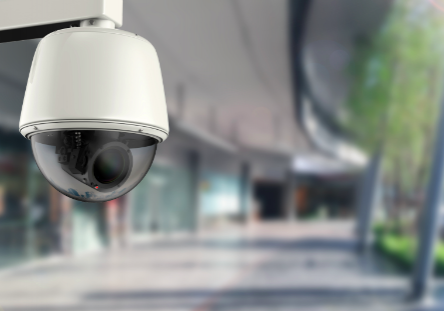
Dome cameras are named for their rounded, dome-shaped housing. They are one of the most common types of security cameras for indoor commercial environments because they are compact, discreet, and available in many resolutions and lens configurations.
Dome cameras are often mounted on ceilings, soffits, or walls. Their design can make it less obvious which direction the camera is facing, adding a modest deterrence benefit in public-facing spaces.
Best settings for dome cameras
- Retail stores and shopping centers
- Office lobbies and corridors
- Schools and campus buildings
- Healthcare waiting areas
- Hotel hallways
- Restaurants
- Multi-family common areas
- Indoor storage rooms
Advantages
- Discreet appearance
- Wide range of indoor and outdoor models
- Vandal-resistant housing options
- Suitable for ceiling or wall mounting
- Available with fixed, varifocal, infrared, and AI-enabled options
Limitations
- Dome bubbles can create glare, reflection, dirt buildup, or condensation if poorly installed
- Not always ideal for long-distance exterior views
- Some enclosed models may have infrared reflection issues in low-light conditions
2. Bullet CCTV Cameras
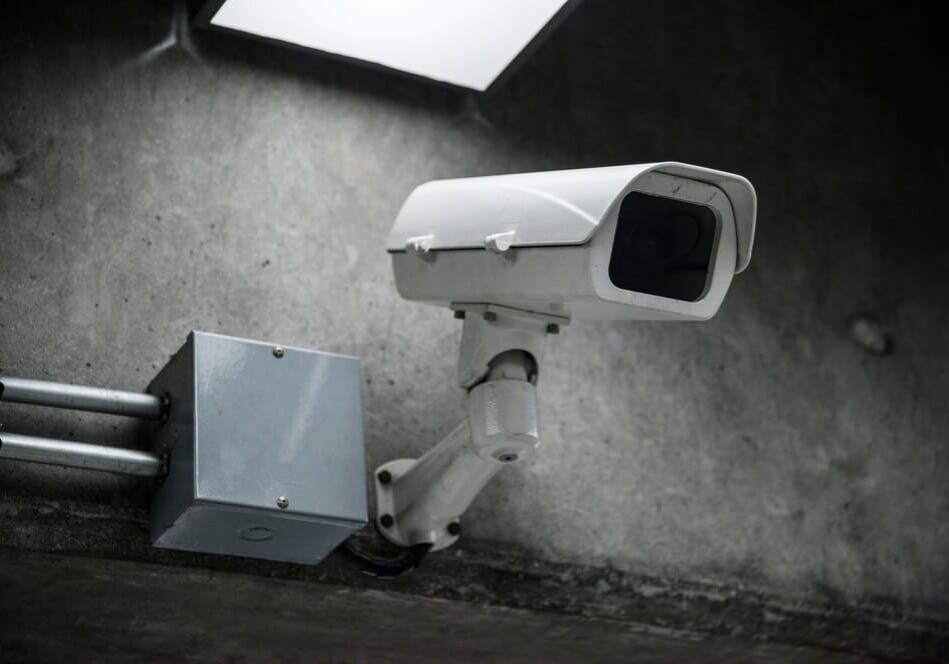
Bullet cameras have a long, cylindrical body that resembles a small bullet or tube. They are highly visible, which makes them useful when deterrence is a priority. Among the outdoor-focused types of CCTV cameras, bullet models are usually the first choice for visible perimeter deterrence.
These cameras are commonly used outdoors because many bullet models are weatherproof and can support long-range lenses, infrared illumination, and strong low-light performance.
Best settings for bullet cameras
- Parking lots
- Building exteriors
- Driveways
- Loading docks
- Fence lines
- Vehicle entrances
- Commercial yards
- Construction sites
- Warehouse perimeters
Advantages
- Highly visible deterrent
- Often supports longer viewing distances
- Commonly available in outdoor-rated versions
- Easy to point toward a specific target area
- Useful for monitoring gates, drive lanes, and perimeter approaches
Limitations
- More noticeable than dome or turret cameras
- May need several units for wide-area coverage
- Mounting hardware and cable protection matter in exposed locations
3. Turret CCTV Cameras
Turret cameras, sometimes called eyeball cameras, use a ball-and-socket design inside a small base. Unlike dome cameras, they do not use a fully enclosed clear bubble around the lens.
This design makes turret cameras easier to aim during installation and maintenance. They are popular for entrances, hallways, retail areas, offices, and covered outdoor spaces. Of all the types of CCTV cameras covered here, turret models are often the easiest for installers to fine-tune on site.
Best settings for turret cameras
- Building entrances
- Hallways and corridors
- Retail floors
- Offices
- Reception areas
- Covered exterior doors
- Apartment building entrances
- Interior common spaces
Advantages
- Easy to adjust and aim
- Compact, modern appearance
- Often produces cleaner infrared images than some enclosed dome designs
- Available in indoor and outdoor-rated models
- Useful for both overview and closer-detail coverage
Limitations
- The exposed lens can be easier to tamper with or dirty
- Outdoor models need appropriate weather ratings
- Placement should account for reachable mounting heights and vandalism risks
4. PTZ CCTV Cameras
PTZ stands for pan, tilt, and zoom. These cameras can move horizontally, move vertically, and zoom in on activity through remote controls, automated patrol patterns, or certain analytics-driven workflows. PTZ is one of the more specialized types of CCTV cameras, built for active monitoring rather than passive, fixed coverage.
PTZ cameras are useful when security teams need flexible viewing of a large area. They are common in parking lots, commercial yards, construction sites, industrial facilities, campuses, and warehouse exteriors.
Best settings for PTZ cameras
- Large parking lots
- Warehouse yards
- Industrial facilities
- Construction sites
- Commercial campuses
- Large outdoor properties
- Shipping and receiving areas
- Perimeter zones
Advantages
- Can pan, tilt, and zoom remotely
- Covers changing activity across a broad area
- Optical zoom can provide more usable detail at a distance
- Useful for active monitoring and incident follow-up
- Can be programmed to follow scheduled patrol routes
Limitations
A PTZ camera can only look in one direction at a time. If it is zoomed in on one incident, it may not be recording activity elsewhere in the area.
For that reason, PTZ cameras usually work best as a supplement to fixed cameras rather than as the only surveillance layer. Fixed cameras provide continuous coverage of critical locations, while PTZ cameras provide flexible detail and active tracking.
5. Fisheye and 360-Degree CCTV Cameras
Fisheye cameras use an ultra-wide lens to capture a large area from one mounting point. Depending on the camera and installation position, they can provide 180-degree or 360-degree coverage.
These cameras are especially helpful in open spaces where broad situational awareness matters more than long-distance facial identification. Among wide-coverage types of CCTV cameras, fisheye models typically require the least hardware to cover an open room.
Best settings for fisheye cameras
- Retail floors
- Lobbies
- Warehouses
- Open office spaces
- Schools
- Gymnasiums
- Multi-family common areas
- Large meeting rooms
- Amenity spaces
Advantages
- Covers a broad area from one central point
- Can reduce blind spots in open spaces
- May reduce the number of cameras needed for overview coverage
- Useful for broad situational awareness
- Can be combined with video-management software that “dewarps” the image into more natural views
Limitations
- Images may appear distorted without dewarping software
- Mounting height strongly affects coverage quality
- Not ideal as the only camera where fine facial or license-plate detail is needed. A fixed or varifocal camera may still be necessary for identification-level views
Fisheye cameras are frequently used in large open areas because they provide broad coverage that fixed narrow-angle cameras cannot match from a single location.
6. Multi-Sensor and Panoramic CCTV Cameras
Multi-sensor cameras combine several camera sensors into one housing. Each sensor can face a different direction, allowing a single device to capture multiple views at once. Multi-sensor models sit among the more specialized types of CCTV cameras, designed to replace several fixed units at once.
Panoramic cameras may also create a wide, continuous view across a large area. They are often used in locations where a single fixed camera would leave blind spots and a PTZ camera would not provide continuous coverage in all directions.
Best settings for multi-sensor cameras
- Loading docks
- Building corners
- Parking lots
- Large warehouse interiors
- Facility perimeters
- Commercial intersections
- Construction-site entrances
- Transportation hubs
- Industrial yards
Advantages
- Simultaneous coverage in multiple directions
- Can reduce the number of individual cameras required in some locations
- Strong situational awareness for wide areas
- Useful at corners, intersections, and large exterior zones
- Can provide both overview and detail views when configured correctly
Limitations
- Higher equipment cost than a single fixed camera
- May require more network bandwidth and storage
- Requires careful camera design, lens configuration, and installation
- Not every property needs multi-sensor coverage
7. Varifocal CCTV Cameras
Varifocal cameras have an adjustable focal length. Unlike a fixed-lens camera, a varifocal camera can be configured to provide either a wider overview or a narrower view with more detail. Varifocal is less a standalone camera type and more a lens option layered onto several other types of CCTV cameras, including dome, bullet, and turret models.
Some varifocal cameras are manually adjusted during installation, while motorized varifocal cameras allow installers or authorized users to adjust the lens remotely.
Best settings for varifocal cameras
- Building entrances
- Vehicle gates
- Loading docks
- Long hallways
- Cash-handling areas
- Reception desks
- Parking-lot entry points
- Inventory storage areas
Advantages
- Adjustable field of view
- Greater flexibility during installation
- Can help balance broad coverage with identification detail
- Useful when the distance between the camera and target varies
- Motorized models can simplify remote adjustment
Limitations
- Requires careful setup and adjustment
- A narrower view may reduce overall context
- More zoom does not automatically mean usable identification detail
- Lighting, mounting height, target speed, and camera angle still affect performance
8. Infrared and Low-Light CCTV Cameras
Infrared, often shortened to IR, allows cameras to capture video in low-light or dark conditions by using infrared illumination. Low-light cameras may also use larger sensors, improved image processing, or specialized lenses to produce usable color video in dim conditions. These are among the imaging-focused types of CCTV cameras, grouped by how they handle darkness rather than by their housing shape.
These cameras are important for businesses that need overnight visibility in parking lots, exterior entrances, warehouses, hallways, yards, and other low-light environments.
Best settings for infrared and low-light cameras
- Parking areas
- Building exteriors
- Warehouse interiors
- Construction sites
- Hallways with limited lighting
- Overnight operations
- Loading areas
- Remote properties
Advantages
- Supports nighttime surveillance
- Reduces dependence on ambient lighting
- Useful for after-hours recording
- Available in many bullet, dome, turret, and PTZ models
- Supports perimeter and intrusion monitoring workflows
Limitations
- Infrared range varies by camera
- Reflective surfaces can create glare
- Rain, fog, insects, cobwebs, and dust can affect IR image quality
- Poor camera placement can reduce visibility
- Infrared video is often black and white rather than full color
9. Thermal CCTV Cameras
Thermal cameras detect heat differences rather than visible light. They can identify heat signatures from people, vehicles, and equipment even in complete darkness or difficult visibility conditions. Thermal is generally the most specialized of the imaging-based types of CCTV cameras, built for detection rather than identification.
Thermal video is commonly used for detection, especially along long perimeters or at remote sites where visible-light cameras may be limited by darkness, haze, smoke, or glare.
Best settings for thermal cameras
- Long facility perimeters
- Critical infrastructure
- Industrial sites
- Remote properties
- Large commercial yards
- Wooded property lines
- Low-visibility environments
- High-risk exterior zones
Advantages
- Detects people and vehicles in complete darkness
- Can work in conditions where visible-light cameras struggle
- Useful for long-range perimeter detection
- Supports analytics-driven intrusion alerts
- Can improve awareness around remote or difficult-to-light areas
Limitations
Thermal cameras generally do not provide the facial detail, color detail, or license-plate readability available from visible-light cameras. They are usually most effective when paired with standard cameras that can verify activity and provide investigatory detail.
10. LPR and ANPR CCTV Cameras
LPR stands for License Plate Recognition, while ANPR stands for Automatic Number Plate Recognition. These specialized camera systems are designed to capture and process license-plate information at vehicle entry points, parking facilities, gates, garages, and drive lanes. LPR/ANPR rounds out the specialized types of CCTV cameras built around a single data-capture task rather than general surveillance.
Unlike standard overview cameras, LPR cameras are designed around plate size, vehicle speed, lighting conditions, camera angle, and the direction of travel.
Best settings for LPR and ANPR cameras
- Vehicle gates
- Parking garages
- Commercial driveways
- Delivery lanes
- Gated communities
- Warehouses
- Distribution centers
- Campuses
- Auto dealerships
- Controlled-access properties
Advantages
- Creates vehicle-entry and exit records
- Supports gate and parking-management workflows
- Helps investigate vehicle-related incidents
- Can identify approved, unknown, or flagged vehicles based on configured policies
- Useful for security teams managing high-traffic vehicle entrances
Limitations
- Camera angle, lighting, vehicle speed, plate condition, and mounting height affect performance
- An LPR camera should be positioned specifically for the lane it monitors
- Overview cameras are still needed to capture context around the vehicle and driver
- Organizations need clear policies for retention, access, privacy, and use of vehicle data
CCTV Camera Features That Matter Beyond Camera Type
Camera type matters, but it is only one part of an effective surveillance system. A high-end camera installed at the wrong angle can provide less useful footage than a properly selected, correctly placed basic camera. No matter which types of CCTV cameras a property uses, these underlying features determine how usable the footage actually is.
Resolution and image detail
Higher resolution can provide more detail, but it does not automatically guarantee better identification. Camera distance, lens choice, lighting, movement, and field of view all affect whether footage is usable.
Lens and field of view
A wide-angle lens provides more overall context but less detail at a distance. A narrow lens provides more detail but covers less area. Varifocal lenses can help balance these needs.
Optical zoom and digital zoom
Optical zoom uses the camera lens to enlarge a target before image capture. Digital zoom enlarges existing pixels after capture. Optical zoom usually provides better detail for long-distance viewing.
WDR and HDR
Wide Dynamic Range and High Dynamic Range features help cameras handle scenes with both bright and dark areas, such as entrances with strong sunlight behind a person entering the building.
Frame rate
Higher frame rates can be useful for fast-moving activity, vehicles, and certain industrial processes. Higher frame rates also increase storage and bandwidth needs.
AI video analytics
Many modern systems offer analytics that can help identify relevant activity, such as:
- Person detection
- Vehicle detection
- Line crossing
- Intrusion zones
- Loitering
- Object detection
- Camera tampering
- Searchable events
Analytics should be configured based on the property’s actual risk. They can reduce irrelevant motion alerts, but human review remains important for high-consequence decisions.
Cybersecurity
Connected cameras are part of a business network and should be protected accordingly. Good cybersecurity practices include:
- Strong passwords
- Multi-factor authentication
- Role-based user access
- Firmware updates
- Network segmentation
- Encrypted transmission and storage
- Regular permission reviews
- Vendor security reviews
Wired, Wireless, PoE, Cloud, and Hybrid CCTV Systems
Camera type and recording architecture are different decisions. A business might use dome, bullet, turret, and LPR cameras in the same system while recording video locally, in the cloud, or through a hybrid model. Choosing among the types of CCTV cameras is only half the design process; how the footage is recorded and stored is the other half.
Local recording
Local recording typically uses an NVR or DVR installed on-site. It gives businesses direct control over their storage hardware and can continue recording locally during some internet outages.
Cloud recording
Cloud surveillance systems allow authorized users to access video remotely and can simplify multi-site management. They may also reduce reliance on local recording hardware, depending on the system design.
Hybrid recording
Hybrid systems combine local or edge recording with cloud management, backup, or remote access. This approach can provide local resilience while supporting centralized oversight.
Before choosing a recording model, consider:
- Internet reliability
- Network capacity
- Number of cameras
- Required retention period
- Remote-access needs
- Number of locations
- Cybersecurity requirements
- Budget and ongoing subscription costs
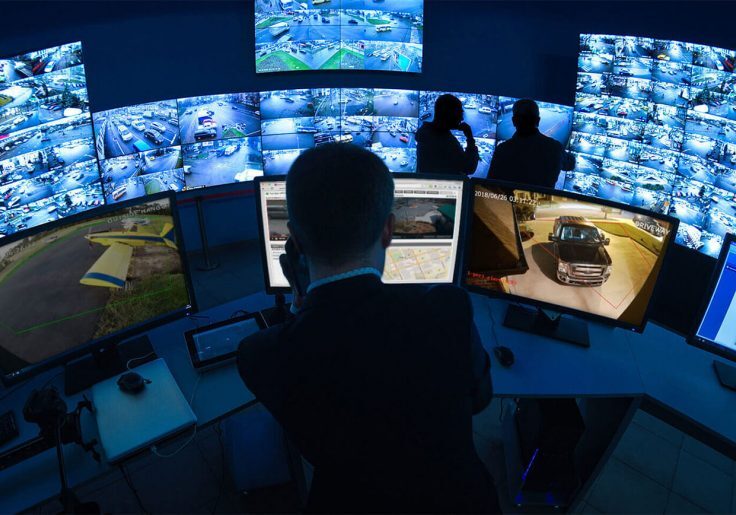
- Need for live video monitoring
How to Choose the Right Type of CCTV Camera
Choosing the right camera type starts with the security objective, not a camera catalog. Working backward from your objective to the right types of CCTV cameras keeps the process from turning into a shopping exercise.
- Define whether the goal is deterrence, detection, identification, investigation, monitoring, or access verification.
- Identify high-priority areas such as entrances, exits, parking lots, inventory rooms, cash areas, gates, hallways, loading docks, workspaces, and perimeters.
- Assess lighting, weather, target distance, movement, mounting height, and blind spots.
- Choose form factors that suit each coverage area.
- Select resolution, lens type, low-light performance, and zoom needs based on the detail required.
- Determine whether specialty cameras such as PTZ, fisheye, multi-sensor, thermal, or LPR are necessary.
- Choose appropriate connectivity and recording architecture.
- Consider whether AI analytics, cloud access, access-control integration, or live monitoring will add value.
- Plan cybersecurity, permissions, maintenance, and retention policies.
- Conduct a professional site survey before purchasing or installing equipment.
The Best CCTV System Uses More Than One Camera Type
There is no single best CCTV camera for every property. The strongest surveillance systems use a combination of cameras based on the risks and layout of the site. In practice, most well-designed commercial surveillance systems draw from several types of CCTV cameras rather than standardizing on just one.
For example:
- Bullet cameras may monitor the perimeter.
- Turret cameras may cover entrances and hallways.
- Fisheye cameras may provide broad coverage in open interior spaces.
- PTZ cameras may monitor large yards or parking areas.
- LPR cameras may document vehicle access.
- Thermal cameras may support long-range perimeter detection.
Camera placement, lighting, image quality, storage, cybersecurity, maintenance, and response procedures are just as important as the camera model itself.
Need Help Selecting CCTV Cameras?
Businesses with complex properties, multiple locations, regulated operations, large perimeters, or high-value assets often benefit from a professional camera assessment. Resolute Partners can help sort through the types of CCTV cameras available and match them to your coverage goals, existing infrastructure, camera placement, cloud or hybrid recording, AI analytics, LPR, and live-monitoring needs.
A properly designed system does more than record an incident after it happens. It helps create clear visibility, useful evidence, and a stronger overall security posture.
Conclusion: Secure Your Property with the Best CCTV Cameras
Tailored video security solutions should be the backbone of any credible corporate CCTV security system. Business owners and security teams must invest time and money to pick systems that suit their needs, budget, and operations timelines. Selecting the appropriate types of CCTV cameras offers greater asset protection without unnecessary costs and time delays. Using guidance from this article, a business hopes to set up a security system tailored to its own specific needs.
Ready to secure your business with a tailor-made solution? Contact Resolute Partners to ensure our experts design a security system that fits your needs.
Frequently Asked Questions About CCTV Camera Types
1. What are the main types of CCTV cameras?
The main types of CCTV cameras include dome, bullet, turret, PTZ, fisheye, multi-sensor, varifocal, infrared, thermal, LPR/ANPR, weatherproof, IP/PoE, analog, wireless, and covert cameras. The right option depends on the coverage area, lighting, required detail, environment, network, and security objective.
2. What is the difference between dome, bullet, and turret CCTV cameras?
Dome cameras use a dome-shaped housing and are often selected for discreet indoor monitoring. Bullet cameras are cylindrical and highly visible, making them common for outdoor, parking, and perimeter coverage. Turret cameras use an adjustable ball-and-socket design and are often easier to aim, making them useful for entrances, hallways, and covered exterior areas. These three form-factor types of CCTV cameras are usually the starting point for any indoor/outdoor coverage plan.
3. Are PTZ cameras better than fixed CCTV cameras?
Not necessarily. PTZ cameras can pan, tilt, and zoom, making them useful for large spaces and active monitoring. However, a PTZ camera can only look in one direction at a time. Among the types of CCTV cameras built for active monitoring, PTZ is the most flexible but also the least suited to serve as sole coverage. Fixed cameras continuously cover a defined area, so most commercial systems use fixed cameras as the primary coverage layer and PTZ cameras as a supplement.
4. What is a fisheye CCTV camera used for?
Fisheye cameras provide an ultra-wide view, often 180 degrees or 360 degrees depending on installation. They are useful for open spaces such as retail floors, lobbies, warehouses, common areas, and large rooms where broad visibility is needed.
5. What is the difference between infrared and thermal CCTV cameras?
Infrared cameras use infrared light to capture video in darkness. Thermal cameras detect heat signatures and can help detect people or vehicles in complete darkness, haze, smoke, or difficult weather. Thermal cameras are generally paired with visible-light cameras when facial identification or license-plate detail is needed.
6. What is an LPR or ANPR camera?
LPR means License Plate Recognition, and ANPR means Automatic Number Plate Recognition. These are specialized camera systems designed to capture and process license-plate information at vehicle gates, parking lots, garages, delivery lanes, campuses, and controlled-access properties.
7. Is PoE better than Wi-Fi for security cameras?
For most permanent commercial installations, PoE is generally more reliable because one Ethernet cable provides both network connectivity and power. Wi-Fi can be useful in difficult-to-wire or temporary locations, but it depends on reliable wireless coverage and may still require local power.
8. Which CCTV camera is best for outdoor security?
The best outdoor camera depends on the specific area. Bullet cameras are common for long exterior views, turret and dome cameras work well at entrances, PTZ cameras suit large lots, and LPR cameras are designed for vehicle lanes. Weighing outdoor-rated types of CCTV cameras against the specific zone they’ll cover is usually more useful than picking one model for the whole property. Choose outdoor equipment with appropriate weather, temperature, and vandal-resistance ratings.
9. How much does a CCTV camera system cost?
Costs depend on the number and type of cameras, resolution, lenses, AI features, installation complexity, cabling, network upgrades, storage architecture, retention requirements, monitoring, and support. The ranges in this guide are directional only; a site assessment is required for an accurate project quote.
10. Can CCTV cameras work with cloud storage and live video monitoring?
Yes. Modern IP camera systems can record locally, in the cloud, or through a hybrid approach. AI analytics can flag certain activity, while live video monitoring allows trained personnel to review relevant alerts and follow agreed response procedures.

Michael S. Blanco is the Chief Executive Officer and Co-Founder of Resolute Partners, LLC, where he leads strategic initiatives across various divisions. After owning family entertainment centers in New England, he co-founded Resolute Partners in 1996, launching the first Internet cafés for the U.S. Navy and partnering with AT&T for global deployment. A pioneer in wireless communications, Michael has expanded the company’s focus to include Energy Management/IoT, Cybersecurity, and Managed Video Security. He holds a degree from the Rochester Institute of Technology.

Stay up to date.
Subscribe for latest news, protection tips, special offers, and more!