Summary: Infrared vs thermal cameras serve different security needs, infrared delivers recognizable video for verification, while thermal detects heat signatures in total darkness or fog. Most commercial properties benefit from a hybrid approach combining both technologies across detection, verification, and monitoring.
Choosing between infrared vs thermal cameras is not simply a matter of selecting the camera with the highest resolution or longest advertised range. Each technology serves a different security purpose, and the right choice depends on your property layout, lighting conditions, detection requirements, existing infrastructure, and response plan.
Infrared cameras are generally suited to locations where your team needs recognizable video for verification and identification. Thermal cameras are better suited to detecting people, vehicles, and other heat-producing objects in darkness or difficult outdoor conditions. Many commercial properties benefit from using both technologies as part of a layered video security system.
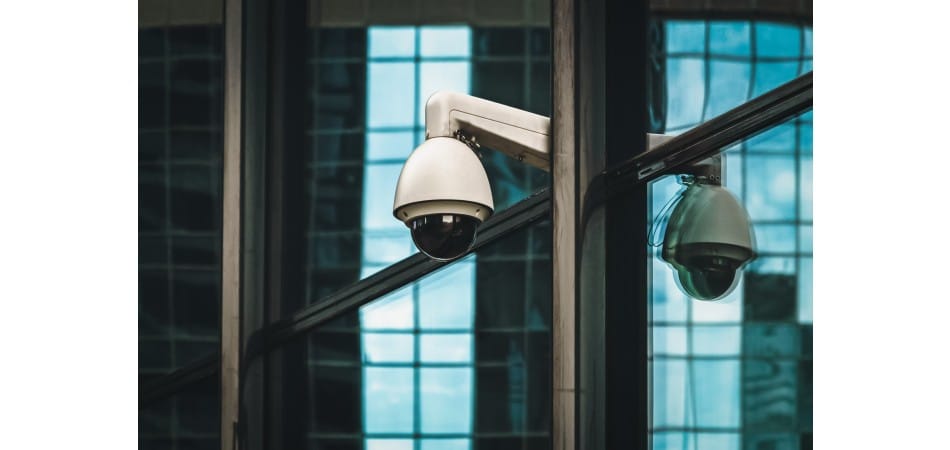
This guide breaks down the infrared vs thermal cameras debate, where each technology fits, and what commercial organizations should consider before upgrading or expanding their surveillance system.
What Is the Difference Between Infrared and Thermal Cameras?
The terms “infrared camera” and “thermal camera” are often used interchangeably, but they do not describe the same type of imaging.Getting the infrared vs thermal cameras distinction right is the first step toward specifying the correct system for your property.
How Infrared Security Cameras Work
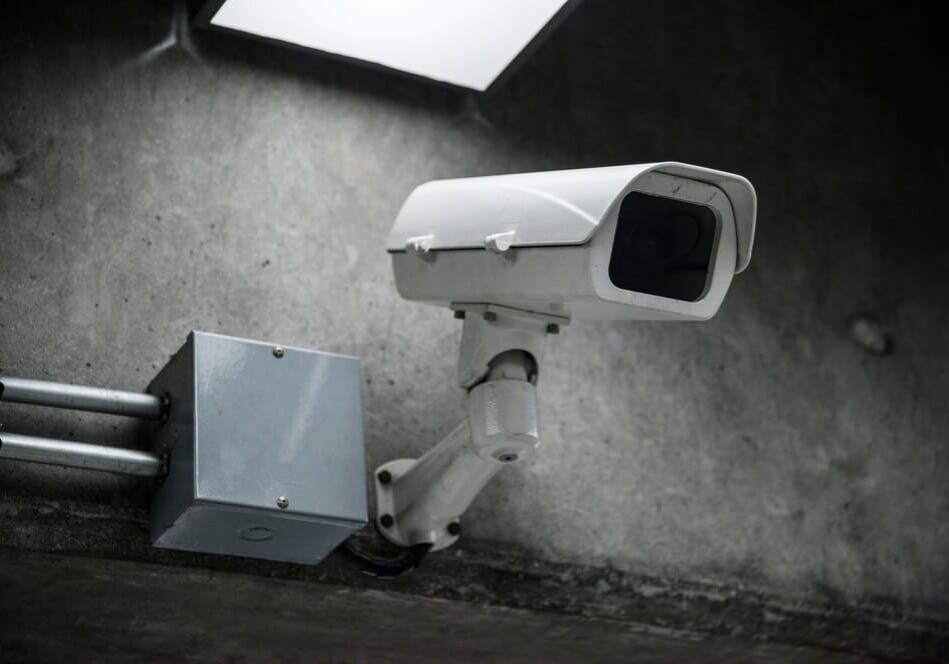
In commercial security, “infrared camera” usually refers to a camera that uses infrared illumination for night vision. Built-in or external infrared LEDs emit invisible near-infrared light onto the scene. The camera sensor captures the light reflected from people, vehicles, buildings, and other objects.
The resulting image typically appears in grayscale. It resembles standard video footage but does not depend on visible light from the sun, building lights, or streetlights when the camera has sufficient infrared illumination.
Infrared cameras can be useful when a security team needs to:
See recognizable details.
- Verify activity at an entrance or gate.
- Review clothing and physical characteristics.
- Monitor vehicles and loading areas.
- Capture video evidence for an investigation.
- Maintain coverage in areas with existing lighting or planned illumination.
How Thermal Security Cameras Work
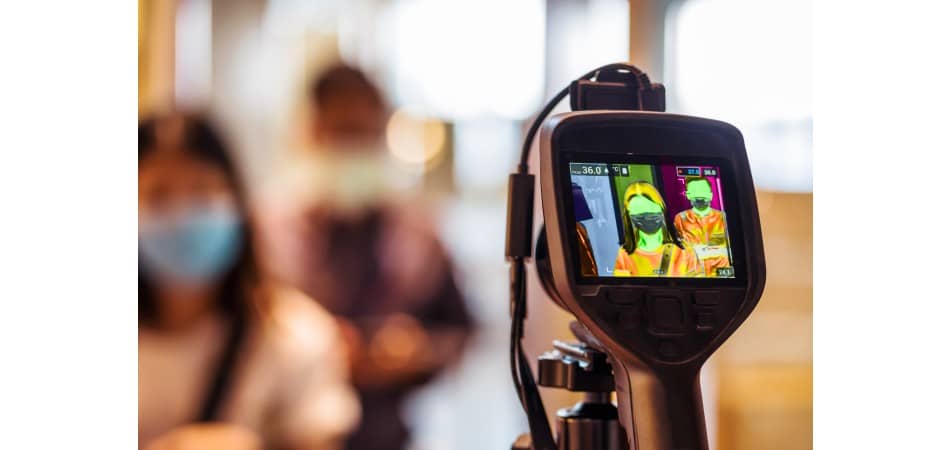
Thermal cameras detect infrared radiation emitted as heat. They do not illuminate the scene. Instead, the camera identifies temperature differences between people, vehicles, equipment, structures, and the surrounding environment.
A thermal image does not look like ordinary video. It displays heat patterns using grayscale or color palettes. A person may appear as a high-contrast heat signature against a cooler background, even when the surrounding area is completely dark.
Thermal cameras can be useful when a security team needs to:
- Detect activity across a dark perimeter.
- Monitor large outdoor areas.
- Identify people or vehicles against a contrasting background.
- Maintain awareness in low-visibility conditions.
- Monitor heat anomalies in equipment or electrical systems.
- Reduce nuisance alerts when combined with suitable analytics.
Thermal imaging is still a form of infrared imaging, but it operates differently from the near-infrared illumination used by standard night-vision security cameras.
Infrared vs Thermal Cameras: Key Differences at a Glance
Here’s how these technologies compare across the factors that matter most for security applications:
| Feature | Infrared (Active IR) Cameras | Thermal Cameras |
|---|---|---|
| What they detect | Reflected near-infrared light (0.7–1.0 μm) | Emitted long-wave infrared heat (8–14 μm) |
| Light requirement | Need IR illuminators or ambient light | Work in complete darkness; no light needed |
| Image type | Grayscale video similar to daylight footage | Heat map with temperature-based contrast (grayscale or color palettes) |
| Detail level | Can identify faces, license plates, text, and clothing details | Shows heat signatures only; cannot identify faces or read text |
| Detection range (humans) | 30–50 meters for clear identification | 200–500+ meters for detection (depends on lens and resolution) |
| Weather performance | Struggles in fog, smoke, heavy rain, and dust | Penetrates light fog, smoke, dust, and light rain effectively |
| Glass/walls | Can see through glass windows | Cannot see through glass or walls; glass is opaque to LWIR |
| Temperature measurement | No | Yes, radiometric models provide per-pixel temperature data |
| Day/night operation | Day: color video; Night: grayscale IR video | Works identically day and night; detects heat regardless of light |
| Cost range (2026) | $50–$500 (consumer), $500–$2,000 (commercial) | $300–$1,000 (consumer), $3,000–$15,000+ (commercial) |
| Best for | Porches, entryways, parking lots, and general surveillance with lighting | Perimeters, long-range detection, total darkness, fog-prone areas, and critical infrastructure |
| False alarm rate | Higher; triggers on foliage movement, shadows, animals, and weather | Lower with AI; can distinguish humans/vehicles from animals, foliage, and weather |
| Power requirements | Standard PoE or 12V DC | Standard PoE or 12V DC (no additional lighting power needed) |
| Installation complexity | Simple, similar to standard CCTV | Simple, same mounting, but may require calibration for optimal performance |
How Do I Choose Between Thermal and Standard Security Cameras?
Choosing between thermal and standard (infrared/visible-light) security cameras depends on your specific use case, environment, and budget. Working through the infrared vs thermal cameras decision doesn’t have to be complicated with the right framework.
1. Do you need to measure temperature or just see in the dark?
Yes, temperature measurement needed → Choose a radiometric thermal camera. These provide per-pixel temperature data, useful for detecting equipment overheating, fire hazards, or process monitoring.
No, just night vision needed → An active IR camera is sufficient and far more cost-effective for general surveillance.
2. What are your lighting conditions?
Some ambient light, or can install IR illuminators → IR cameras work well. Moonlight, starlight, streetlights, or even small IR LEDs (850nm or 940nm) provide enough illumination.
Total darkness, remote sites, no power for lighting → Thermal cameras are essential. They work without any light source, making them ideal for unpowered remote locations, dense forests, or areas where installing lighting is impractical or would reveal camera positions.
3. What’s your detection range requirement?
Under 50 meters, need facial/license plate identification → IR or visible-light cameras with IR illumination. These provide recognizable video evidence suitable for law enforcement and legal proceedings.
200-500+ meters, perimeter awareness, early detection → Thermal cameras excel at long-range detection. A single thermal camera can monitor a 500-meter fence line, replacing multiple IR cameras.
4. Will the environment include fog, smoke, dust, or camouflage?
Yes, frequent obscurants → Thermal cameras penetrate light fog, smoke, dust, and light rain far better than visible or IR cameras. This makes them critical for industrial sites, wildfire-prone areas, coastal regions with fog, or dusty environments.
No, clear conditions most of the time → Active IR is sufficient and provides better visual detail for identification.
5. Do you need to identify people or just detect presence?
Identification required (faces, clothing, license plates, text) → IR/visible cameras. Thermal cameras show heat blobs; you can tell a person is there, but not who it is.
Detection only (movement, presence, intrusion alert) → Thermal cameras excel here, especially with AI analytics that filter out false alarms from animals, foliage, and weather.
How AI Analytics Improve Infrared and Thermal Security
AI analytics help security systems identify relevant events instead of treating every movement as a threat. The analytics can process infrared, thermal, and visible-light video, depending on the camera and platform.
Is Thermal Better Than Infrared for Security?
Neither technology is better for every application. The infrared vs thermal cameras answer always comes down to the specific use case.
Choose Infrared (Active IR) When:
- Monitoring porches, doorways, garages, retail entrances – Close-range identification is critical
- Budget is the primary concern – IR cameras cost 5-10x less than thermal
- You need recognizable video footage for evidence – Law enforcement requires identifiable faces and license plates
- DIY installation or simple setup – IR cameras are plug-and-play, no calibration needed
- Property has adequate lighting or can add IR illuminators – Streetlights, parking lot lights, or IR LED arrays provide sufficient illumination
- Indoor warehouses, offices, or well-lit areas – Visible-light cameras with IR cut filters work perfectly
Choose Thermal When:
- Securing long perimeters, fence lines, large properties, borders – One thermal camera covers what would require 5-10 IR cameras
- Complete darkness or no power for lighting – Remote sites, forests, unpowered buildings
- Fog, smoke, or dust regularly impair visibility – Industrial facilities, coastal areas, wildfire zones, construction sites
- Early intrusion detection is critical – Critical infrastructure (power plants, utilities, data centers), military bases, airports
- Reducing false alarms from animals, foliage, and weather is a priority – AI-powered thermal cameras achieve 80-90% false alarm reduction
- Monitoring for fire hazards or equipment overheating – Radiometric thermal cameras detect temperature anomalies before visible flames appear
- Cannabis cultivation facilities – Compliance requires perimeter security plus grow room temperature monitoring
- Wildlife monitoring, search and rescue, anti-poaching – Detects heat signatures through brush and foliage
When a Hybrid Camera System Makes Sense
Many commercial properties do not need to choose only one technology. Rather than treating infrared vs thermal cameras as an either/or decision, a hybrid system can assign different camera types to different security layers:
Outer detection layer: Thermal cameras may identify activity approaching a property or perimeter.
Verification layer: Infrared or visible-light cameras may provide a clearer view of the subject.
Access-control layer: Detailed cameras may monitor gates, doors, and other controlled points.
Monitoring layer: AI analytics and trained personnel may assess events and follow the organization’s response procedures.
This approach helps separate two different questions:
- Is someone or something present?
- What exactly is happening, and who or what is involved?
A thermal camera may answer the first question effectively, while an infrared or visible-light camera helps answer the second. Hybrid designs can also integrate with:
- Video management systems.
- Access-control systems.
- Intrusion detection.
- Alarm panels.
- Audio intervention.
- Cloud-based video platforms.
- Live video monitoring.
- Multi-site security dashboards.
Resolute’s documented service scope includes designing, installing, supporting, expanding, and maintaining video security systems, including systems that use existing cameras and newer analytics capabilities.
Infrared vs Thermal Cameras for Commercial Security Applications
Perimeter security
Thermal cameras may support early detection across dark fence lines, remote yards, and large outdoor areas. This is a classic infrared vs thermal cameras use case, since verification typically still requires infrared or visible-light cameras closer to a building, gate, or access point.
Warehouses and distribution centers
Infrared cameras may be suitable for loading docks, employee entrances, and interior areas. Thermal cameras may be considered for large yards, dark perimeters, or selected equipment-monitoring applications. Many warehouses ultimately land on a mixed infrared vs thermal cameras setup rather than standardizing on just one technology.
Construction sites
Construction sites may use infrared cameras for entrances and equipment areas, while thermal cameras may support detection across dark or changing perimeter zones. Camera locations may need to change as the project develops.
Automotive dealerships
Thermal cameras may assist with after-hours detection across vehicle lots. Infrared or visible-light cameras may be more suitable for gates, service areas, and investigation footage.
Cannabis facilities
Infrared and visible-light cameras may support entrances, restricted areas, processing spaces, and access verification. Thermal cameras may be considered for selected outdoor perimeters or temperature-monitoring requirements. The final system must meet applicable state and local regulations.
How AI and Live Monitoring Add Value
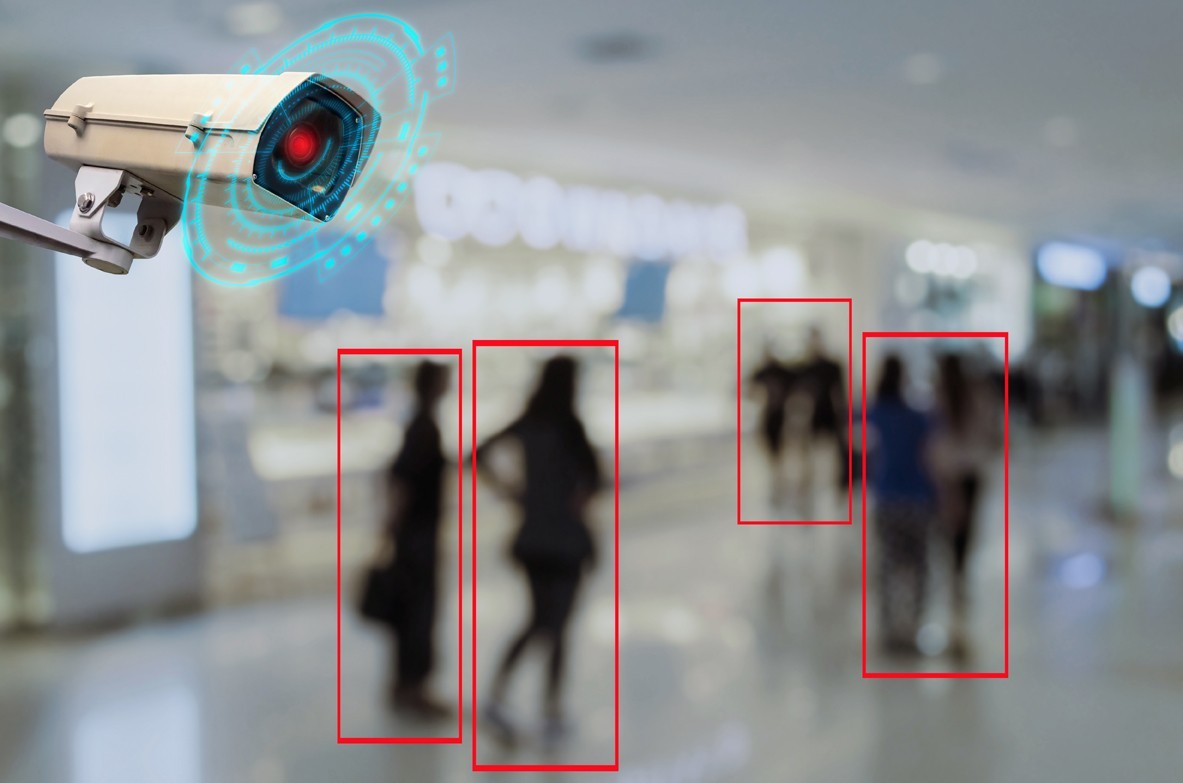
AI analytics can help identify events such as:
- Person or vehicle activity.
- Restricted-area entry.
- Loitering.
- Perimeter breaches.
- Suspicious behavior.
- Camera tampering.
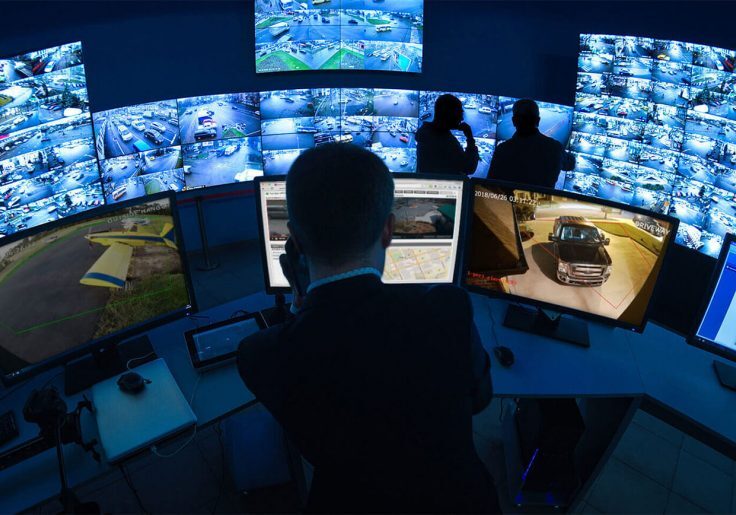
Live video monitoring adds a human review and response layer. Monitoring professionals can assess alerts, follow the site’s response procedures, use live audio where available, notify designated contacts, and document incidents.
Resolute’s documented capabilities include live video monitoring, AI and human video surveillance, cloud-based surveillance, camera health monitoring, and support for existing video security systems.
Common Myths Debunked
Let’s address widespread misconceptions about the infrared vs thermal cameras comparison.
Myth 1: Thermal cameras can see through walls
False. Walls block LWIR radiation completely. Thermal cameras read only the wall’s surface temperature. You cannot see people or objects behind walls.
Myth 2: Thermal cameras can see through glass
False. Glass is opaque to 8-14 μm radiation. Pointing a thermal camera at a window shows the glass temperature, not what’s inside or outside. This is why thermal cameras can’t be mounted behind windows.
Myth 3: Infrared and thermal are the same thing
False. All thermal cameras are infrared (they detect LWIR), but “infrared camera” in security contexts usually means active near-infrared (NIR) cameras. Different spectrum, different physics, different use cases.
Myth 4: Thermal works better in heavy rain
Partly false. Water absorbs IR radiation across all wavelengths. Heavy rain reduces thermal effectiveness significantly, though light rain and mist are manageable. Neither technology is ideal in downpours.
Myth 5: Thermal cameras don’t work during the day
False. Thermal cameras work 24/7. They detect heat, not light, so daylight doesn’t affect performance. In fact, thermal cameras can be more effective during the day when temperature differences between objects and the background are greater.
AI Analytics Integration
On-camera edge AI: Cameras like FLIR FCB-Series and SightLogix SightSensor process analytics locally, reducing bandwidth requirements and working even if network connectivity is lost.
Cloud-based analytics: Platforms like FLIR Prism aggregate data from multiple sites, enabling centralized monitoring and trend analysis.
System integration: Thermal and IR cameras integrate with access control systems, alarm panels, and automated lighting for coordinated response (e.g., thermal detects intrusion → lights turn on → PTZ camera tracks → alarm triggers).
Ready To Choose?
Start by assessing your property:
- Map out detection zones and required ranges
- Identify lighting conditions and environmental challenges (fog, smoke, animals)
- Determine if you need identification (faces, plates) or just detection
- Set a realistic budget (remember: thermal costs more but covers more area)
Need expert guidance? Resolute Partners specializes in AI-powered video surveillance for commercial, industrial, and cannabis facilities. Contact us for a site assessment and custom security camera recommendations tailored to your property’s unique requirements.
FAQ
1. What is the difference between infrared vs thermal cameras?
Infrared security cameras generally use infrared illumination to capture reflected light and create night-time video. Thermal cameras detect heat emitted by people, vehicles, equipment, and other objects. Infrared cameras are generally more useful for visual verification, while thermal cameras are generally more useful for detection in darkness or selected outdoor environments.
2. Is thermal better than infrared for security?
Neither technology is better for every application. Thermal cameras may be more suitable for detecting activity across dark perimeters and large outdoor areas. Infrared cameras may be more suitable for entrances, gates, loading docks, and locations where recognizable video is required. Some commercial properties use both.
3. How do I choose between thermal and standard security cameras?
Start by deciding whether your business needs detection, verification, identification, temperature monitoring, or a combination of these. Then consider lighting, property size, environmental conditions, existing CCTV infrastructure, analytics, and response requirements. A professional site assessment can determine which camera type is appropriate for each area.
4. Can thermal cameras see in complete darkness?
Yes. Thermal cameras detect heat rather than reflected visible or infrared light, so they do not require scene illumination. However, they still require suitable power, connectivity, mounting, lens selection, and environmental conditions.
5. Can infrared cameras work in complete darkness?
Yes, when the camera has sufficient infrared illumination. Built-in or external IR illuminators must reach the area being monitored. If illumination is inadequate or blocked, the quality of the night-time image may be reduced.
6. Can thermal cameras identify people?
Thermal cameras can detect a person’s heat signature, but they generally do not provide the facial, clothing, text, or license-plate detail required for reliable identification. An infrared or visible-light camera may be needed for verification.
7. Can thermal cameras see through smoke, fog, glass, or walls?
Thermal cameras may maintain useful contrast in some light or moderate smoke and fog, but dense smoke and heavy fog can still affect performance. Thermal cameras generally cannot provide a normal view through standard glass or solid walls.
8. Do thermal cameras work during the day?
Yes. Thermal cameras detect heat and can operate during daylight and at night. Their performance still depends on temperature contrast, weather, distance, lens selection, and the camera’s intended security purpose.
9. Can thermal cameras integrate with existing CCTV systems?
In many cases, thermal cameras can be added to an existing CCTV or video management system. Compatibility should be checked across the camera, network, recording equipment, storage, analytics, and monitoring platform. A complete camera replacement may not be necessary.
10. Do commercial businesses need infrared, thermal, or both?
The answer depends on the property and the security objective. Infrared cameras may support verification and identification, while thermal cameras may support early detection across dark or open areas. A layered system using both technologies may be appropriate for larger or higher-risk properties.
11. Can AI analytics work with infrared and thermal cameras?
Yes, depending on the camera and video platform. AI analytics may help identify person and vehicle activity, restricted-area entry, loitering, perimeter breaches, suspicious behavior, and camera tampering. AI should be configured as part of a complete system and response process rather than treated as a replacement for professional security design.
12. Does live video monitoring work with thermal and infrared cameras?
In many systems, both camera types can send alerts or video to a live monitoring team. Monitoring professionals can review events, follow site-specific response procedures, use live audio where available, notify designated contacts, and document incidents. Resolute’s documented capabilities include AI and human video surveillance, live video monitoring, cloud-based surveillance, camera health monitoring, and support for existing video systems.

Michael S. Blanco is the Chief Executive Officer and Co-Founder of Resolute Partners, LLC, where he leads strategic initiatives across various divisions. After owning family entertainment centers in New England, he co-founded Resolute Partners in 1996, launching the first Internet cafés for the U.S. Navy and partnering with AT&T for global deployment. A pioneer in wireless communications, Michael has expanded the company’s focus to include Energy Management/IoT, Cybersecurity, and Managed Video Security. He holds a degree from the Rochester Institute of Technology.
Stay up to date.
Subscribe for latest news, protection tips, special offers, and more!



Live Video Monitoring
Our trained video security surveillance monitoring professionals can quickly spot suspicious activity captured by business security cameras. We review live video to determine if criminal behavior is suspected.